
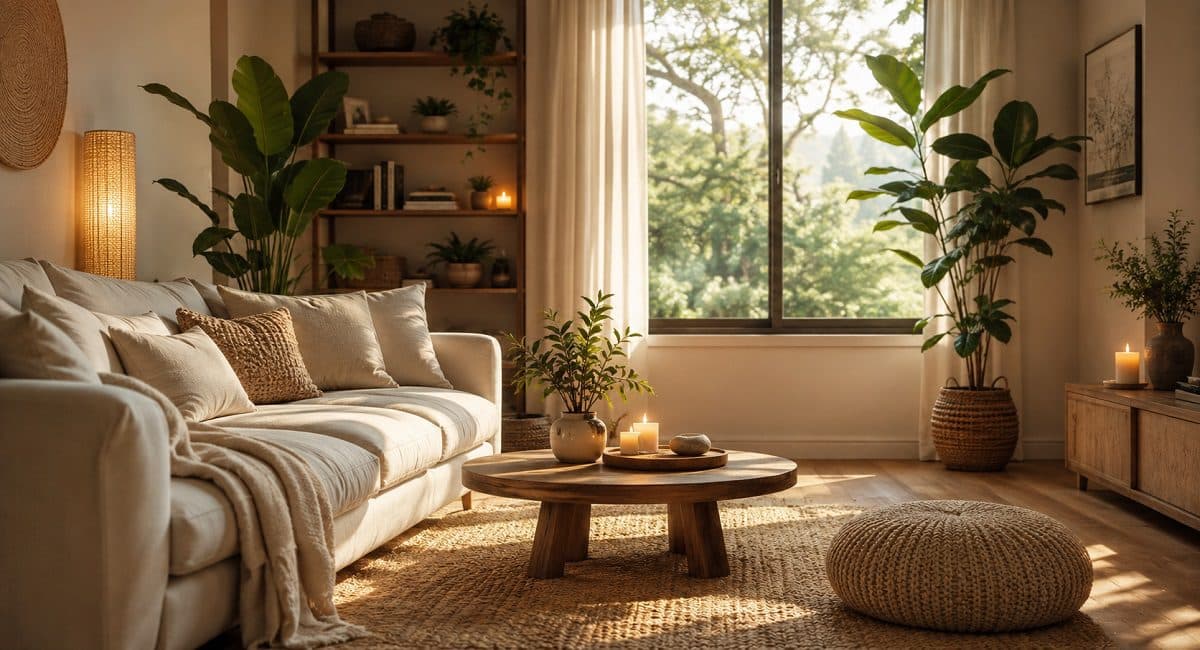
There’s something almost magical about walking into a home that immediately makes your shoulders drop and your breathing slow. In a world that never stops buzzing—notifications, traffic, deadlines, endless to-do lists—your home should be the one place that feels like a deep exhale. Yet for many of us, home has become just another source of low-grade stress: cluttered counters, harsh lighting, rooms that feel chaotic rather than calming.
The good news? You don’t need a massive renovation, a professional interior designer, or a six-figure budget to transform your space into a peaceful sanctuary. Small, intentional changes can shift the entire energy of a room. These ten easy ways are practical, affordable, and surprisingly powerful. They work whether you live in a tiny apartment or a sprawling house, whether you’re a minimalist or someone who loves a little (or a lot of) stuff.
Let’s walk through them together.
You May Also Like




1. Declutter Ruthlessly—but Kindly
Clutter is the silent enemy of peace. Every unused object, every pile of papers, every drawer stuffed with “maybe someday” items creates visual noise that your brain has to process. Studies in environmental psychology show that cluttered spaces raise cortisol levels and make it harder to focus or relax.
Start small. Choose one surface—your kitchen counter, the coffee table, or the top of your dresser. Remove everything. Wipe it clean. Then put back only what you use daily or what genuinely brings you joy. Be honest. That candle you never light? Donate it. The stack of magazines from 2019? Recycle them.
The key is kindness. Don’t shame yourself for the mess. Treat the process like a gentle release rather than a punishment. Once the surface is clear, notice how your eyes (and mind) rest more easily. Repeat this with one area a week. Within a month your home will feel noticeably lighter.
Bonus tip: Create a “maybe” box. Anything you’re unsure about goes in for 30 days. If you don’t miss it, let it go. This reduces decision fatigue and keeps the process from feeling overwhelming.
2. Soften the Lighting
Harsh overhead lights are the fluorescent equivalent of a shouting match. They create sharp shadows, glare, and a clinical feeling that works against calm. Soft, layered lighting does the opposite—it wraps a room in warmth.
Replace bright white bulbs with warm white (2700K–3000K). Add table lamps, floor lamps, and wall sconces so you can create pools of light instead of one harsh source. Dimmers are pure magic; they let you adjust the mood throughout the day. In the evening, switch to lamps only. The lower light signals to your brain that it’s time to wind down.
Candles and string lights are your secret weapons. A few beeswax or soy candles on a tray, or fairy lights draped around a bookshelf, instantly soften a space. Just keep safety in mind—never leave open flames unattended.
If you have overhead fixtures you can’t change, put a dimmable smart bulb in them or simply leave them off most of the time. Your nervous system will thank you.
3. Bring Nature Indoors
Humans are hardwired to feel better around living things. Biophilic design—the practice of connecting indoor spaces with nature—has been shown to reduce stress, improve mood, and even lower blood pressure.
You don’t need a greenhouse. Start with three or four easy houseplants: snake plant, pothos, ZZ plant, or peace lily. They tolerate low light and irregular watering, perfect for beginners. Place them where you’ll see them daily—near your desk, on a windowsill, or beside the sofa.
If plants feel intimidating, try dried flowers, branches in a vase, or a simple bowl of stones and water. Even a small tabletop fountain can introduce the soothing sound of moving water. Fresh flowers from the market once a week are another low-effort way to invite life into the room.
Open windows whenever possible. Fresh air and natural light are free, and they reset the atmosphere of any space faster than almost anything else.
4. Create a Dedicated Calm Corner
Most homes are designed for activity—cooking, working, watching screens. Very few have a designated place for doing nothing. That’s a missed opportunity.
Choose a quiet corner, even if it’s just a chair by a window or a floor cushion against a wall. Add a soft throw, a small side table for tea or a book, and maybe a plant or candle. This becomes your official “pause” spot. No phones allowed. No multitasking. Just sitting, breathing, reading, or staring out the window.
Having a physical place that signals “rest is allowed here” trains your brain to associate that corner with calm. Over time, simply walking toward it can start the relaxation response. Protect this space. Don’t let it become a dumping ground for laundry or mail.
5. Use Calming Colors and Textures
Color affects mood more than most people realize. Bright reds and oranges can energize (or agitate), while soft blues, greens, warm neutrals, and gentle earth tones tend to soothe.
You don’t have to repaint every wall. Start with textiles: throw pillows, blankets, curtains, and rugs in muted, harmonious shades. Layer different textures—linen, cotton, wool, soft knits—to create visual and tactile interest without chaos. A chunky knit blanket draped over a sofa invites touch and comfort.
If you do want to paint, choose one accent wall or a single room. Soft sage, warm greige, pale clay, or dusty blue work beautifully. Matte finishes feel softer than glossy ones.
Keep patterns simple and limited. Too many competing prints create visual noise. One or two quiet patterns mixed with solids is usually enough.
6. Reduce Visual and Auditory Noise
Peace isn’t only about what you see—it’s also about what you hear (and don’t hear). Constant background noise from appliances, traffic, or electronics keeps the nervous system slightly on edge.
Identify the worst offenders. Is the refrigerator humming loudly? Can you close a door to mute street noise? Would a white-noise machine or a small fan help mask disruptive sounds? Soft music or nature soundtracks played at low volume can also create a gentle sonic blanket.
Visually, reduce the number of open shelves filled with small objects. Group items in odd numbers (three or five) and leave breathing room between them. Hide remote controls, chargers, and cables in simple baskets or drawers. The less your eye has to jump from object to object, the calmer the room feels.
Consider a “tech curfew.” Designate one or two places where phones and laptops live when not in use. Charging stations outside the bedroom are especially helpful for better sleep and a quieter mind.
7. Scent Your Space Intentionally
Smell is one of the most powerful and underused tools for creating atmosphere. Certain scents can lower stress hormones and promote relaxation almost instantly.
Lavender, chamomile, sandalwood, cedarwood, and soft citrus are reliable calming choices. Use an essential-oil diffuser for 20–30 minutes in the evening, or light a high-quality scented candle. Simmer pots on the stove—orange peels, cinnamon sticks, rosemary, and a splash of vanilla—fill the house with comforting aroma without synthetic fragrances.
Avoid overpowering or competing scents. One consistent fragrance family per season works better than a rotating parade of strong smells. And always prioritize natural or high-quality options; cheap air fresheners can leave a chemical aftertaste that works against peace.
8. Establish Simple Daily Rituals
A peaceful home isn’t only about how it looks—it’s about how you move through it. Small rituals turn ordinary moments into anchors of calm.
Morning: Open the curtains, make the bed, and take three deep breaths before checking your phone. Evening: Light a candle, put on soft music, and tidy one small surface while the kettle boils for tea. These micro-habits signal transitions and help your nervous system downshift.
Create a closing ritual for the day: dim the lights, put devices away, and spend five minutes in your calm corner. Consistency matters more than perfection. Even on chaotic days, one or two small rituals can restore a sense of order and care.
Involve the senses. The sound of the kettle, the smell of tea, the feel of a soft blanket—these become cues that tell your body it’s safe to relax.
9. Maximize Natural Light and Views
Natural light is one of the most effective (and free) mood elevators available. Dark, closed-off rooms feel heavier; bright, airy ones feel expansive and hopeful.
Pull back heavy curtains during the day. Clean windows so more light comes in. If privacy is an issue, use sheer curtains or top-down bottom-up shades that let light through while blocking the view. Mirrors placed opposite windows bounce light deeper into the room and create a sense of space.
If you have a view—trees, sky, a garden, even a quiet street—frame it. Keep the area around the window clear so your eye can rest on something living or open. Even a small balcony or fire escape can become a mini outdoor retreat with a chair and a plant.
On gray days, full-spectrum daylight bulbs can help bridge the gap until the sun returns.
10. Protect the Energy of Your Space
This one is less about objects and more about boundaries. A peaceful home requires protection from constant intrusion—both physical and digital.
Set clear rules: no work emails after a certain hour if possible, no loud phone calls in shared quiet spaces, no endless news scrolling in the living room. Communicate these boundaries kindly but firmly with anyone who shares the home.
Consider the emotional energy you bring in. After a stressful day, take a moment at the door to leave the tension outside—literally shake it off or take a few breaths before stepping fully inside. Some people find it helpful to wash their hands or change clothes as a symbolic reset.
Finally, practice gratitude for the space itself. A quiet “thank you” when you walk in, or noticing one thing you love about your home each day, strengthens the positive association. Homes respond to the care we give them—not in a mystical way, but in the practical sense that cared-for spaces stay more ordered and inviting.
Transforming your home into a peaceful refuge doesn’t happen overnight, and it doesn’t require perfection. It happens through a series of small, loving choices repeated over time. Start with the one idea that feels easiest or most exciting. Maybe it’s clearing the kitchen counter this weekend, or buying one soft lamp and a plant. Notice how that single change affects how you feel in the space. Then build from there.
Your home is more than four walls and a roof. It’s the backdrop of your daily life, the place that either drains you or restores you. By making these gentle adjustments, you’re not just decorating—you’re creating a living environment that supports your nervous system, your relationships, and your sense of well-being.
Peace isn’t something you have to chase outside. With a little intention, you can invite it to live right where you are.