

The end of a year often creates a strange feeling. We look at the calendar and realize how quickly the months have passed, then start wondering what we could have done differently.
But you don’t need to wait for January 1, 2027, to change your life.
In fact, some of the smartest lifestyle improvements are the ones you begin quietly, long before anyone else notices. You don’t need an extreme fitness program, a restrictive diet, a completely new career, or a dramatic digital detox. Small changes, repeated consistently, can have a much bigger impact than short-lived bursts of motivation.
You May Also Like



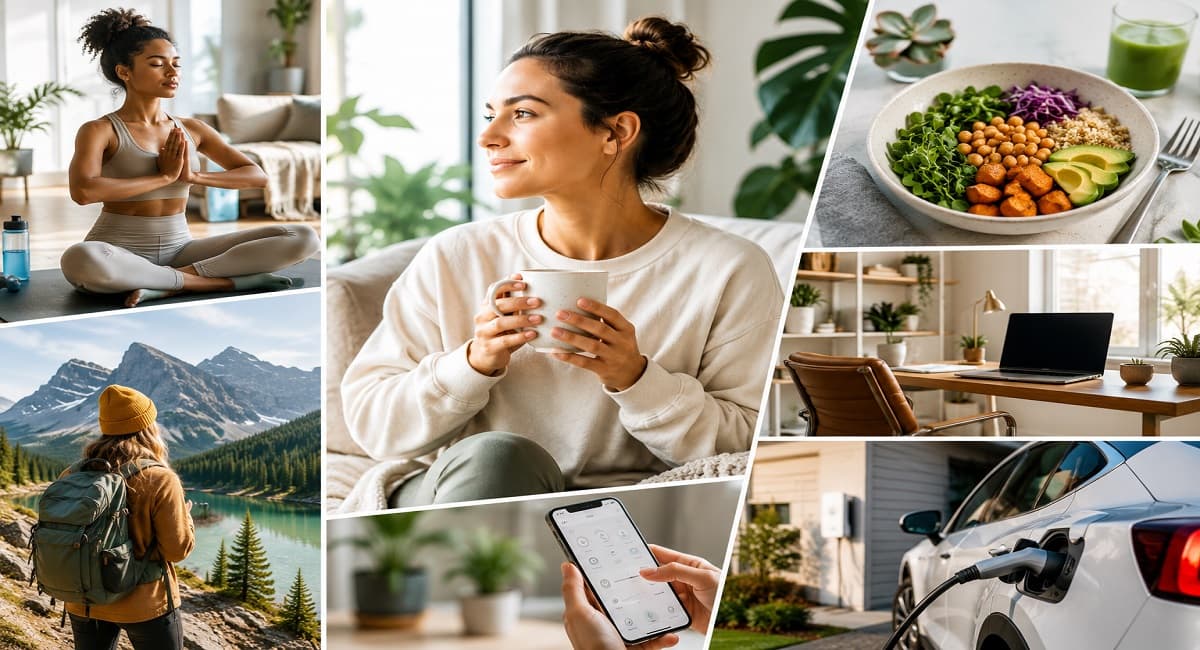
As 2027 approaches, lifestyle is increasingly about working smarter, protecting your energy, using technology intentionally, improving health, and creating more time for the things that actually matter.
Here are 15 smart lifestyle changes worth making before 2027. Some take only a few minutes a day. Others require a bigger mindset shift. Together, they can help you enter the next year feeling healthier, calmer, more organized, and more in control.
1. Stop Treating Sleep Like Leftover Time
One of the easiest lifestyle mistakes to make is sacrificing sleep whenever life becomes busy. Work runs late. You scroll through your phone. You watch another episode. You answer messages in bed. Suddenly, midnight becomes 1 a.m., and the next morning starts with an alarm that feels far too early.
Instead of treating sleep as whatever time remains after everything else is finished, make it a priority. For most adults, consistently getting enough quality sleep supports concentration, mood, physical recovery, and everyday performance. The goal isn’t simply to spend more hours in bed. It’s to create a routine that makes good sleep easier. Try establishing a consistent bedtime and wake-up time. Keep your bedroom comfortable and dark, reduce unnecessary screen time before bed, and avoid turning your bed into an office.
One particularly useful change is creating a 30-minute wind-down period. During that time, dim the lights, put your phone away, read something relaxing, stretch, or prepare for the next day. The goal is to teach your brain that nighttime is no longer productivity time. A better morning often begins the night before.
2. Make Walking Part of Your Everyday Life
You don’t need to become a marathon runner to become more active. Walking is one of the simplest ways to add movement to your day, especially if your job involves sitting for long periods. Instead of thinking about exercise only as a dedicated gym session, look for opportunities to move throughout the day. Take a short walk after lunch. Walk while talking on the phone. Park farther away when practical. Take the stairs when appropriate. Go outside for 10 minutes when you’ve been sitting too long.
The important idea is consistency rather than perfection. You don’t have to hit an arbitrary step count every single day. What matters is reducing long periods of inactivity and making movement a normal part of your lifestyle. By 2027, aim to become someone who naturally moves more instead of someone who only exercises when motivation appears.
3. Build a Simple Strength-Training Routine
Walking is excellent, but strength deserves a place in your lifestyle too. Muscle strength supports everyday activities and becomes increasingly important as we age. Yet many people associate strength training with bodybuilding or spending hours in a gym.
It doesn’t have to be that complicated. A basic routine can include movements such as squats, lunges, push-ups, rows, presses, and core exercises. Beginners can start with bodyweight movements and gradually add resistance. The key is learning proper technique and progressing gradually.
Instead of promising yourself that you’ll work out six days a week, start with something realistic—perhaps two or three strength sessions per week. The best exercise plan isn’t the most impressive one. It’s the one you can actually maintain.
4. Make Protein and Whole Foods More Consistent
Nutrition doesn’t need to become a complicated mathematical equation. Before 2027, one smart change is to make your meals more balanced and less dependent on highly processed convenience foods. Build meals around nutritious staples such as vegetables, fruits, whole grains, beans, nuts, seeds, dairy or alternatives, and quality protein sources.
Protein can be especially useful for supporting muscle maintenance and helping meals feel satisfying. Rather than obsessing over a perfect diet, create a few reliable meals you genuinely enjoy.
For example, you might have:
- Greek yogurt, berries, and nuts for breakfast
- A chicken or bean bowl with vegetables for lunch
- Salmon, tofu, or lean protein with vegetables and whole grains for dinner
- Fruit and nuts as a simple snack
The goal isn’t to eliminate every food you enjoy.
It’s to make nutritious choices the default, not the exception.
5. Create a “Digital Sunset”
Technology is incredibly useful, but constant connectivity can quietly consume your attention. Notifications, emails, social media, group chats, news alerts, and short-form videos can create the feeling that your brain is never completely offline. A digital sunset can help.
Choose a time in the evening when nonessential digital activity ends. Maybe it’s 9 p.m. Maybe it’s 10 p.m. The exact time matters less than creating a boundary. After that point, avoid unnecessary work emails, endless scrolling, and algorithm-driven content.
Use the remaining time for activities that don’t demand constant attention: reading, talking with family, preparing for tomorrow, stretching, cooking, or simply doing nothing. Your phone should be a tool you use. It shouldn’t become the environment you live inside.
6. Audit Your Subscriptions and Recurring Expenses
A surprisingly powerful lifestyle change doesn’t involve exercise or food at all. It involves money. Many people pay for subscriptions they barely remember having. Streaming services. Apps. Cloud storage. Fitness memberships. Software. Delivery memberships. News platforms. Premium digital services. Before 2027, conduct a recurring-expense audit.
Look through your bank and credit-card statements and identify every recurring payment. Then ask:
Would I sign up for this again today?
If the answer is no, cancel it.
Even small monthly expenses can become meaningful when repeated for years.
The bigger benefit isn’t only financial. Reducing unnecessary subscriptions also reduces digital clutter.
A simpler financial life can create mental breathing room.
7. Build an Emergency Fund
Lifestyle improvement isn’t just about feeling good today. It’s also about becoming more resilient when something unexpected happens. An emergency fund can provide a financial buffer for unexpected expenses such as repairs, job disruptions, urgent travel, or other surprises.
The amount you need depends on your circumstances, income, expenses, and financial responsibilities. Instead of focusing on an intimidating final number, start with a small automatic contribution. Set up an automatic transfer after payday, even if the amount is modest.
The habit matters.
Once saving becomes automatic, you don’t have to depend on willpower every month.
Before 2027, try to move from “I should save money” to “saving happens automatically.”
8. Learn to Use AI Without Becoming Dependent on It
Artificial intelligence is changing the way people work, learn, search, create, and organize information. By 2027, AI literacy is likely to be an increasingly useful everyday skill. But the smartest approach isn’t to let AI think for you. It’s to learn how to use AI as a tool.
You can use AI to brainstorm ideas, summarize information, organize projects, practice skills, create first drafts, analyze data, or learn unfamiliar concepts. At the same time, important information should still be checked, especially when decisions involve money, health, legal matters, or other high-stakes topics.
Think of AI as a powerful assistant—not an unquestionable authority. The people who benefit most from new technology are often not those who use it constantly. They’re the ones who understand when it is useful and when it isn’t.
9. Replace Constant Consumption With Intentional Creation
Modern digital life encourages endless consumption. Watch another video. Scroll another feed. Read another headline. Check another notification.
Repeat. Before 2027, try shifting part of your digital life from consumption toward creation. Write something. Cook something. Photograph something. Build a website. Start a small project. Learn an instrument. Draw. Garden. Make videos. Start a newsletter.
Creating requires more effort than scrolling, but it can also feel significantly more rewarding. You don’t need to become a professional creator. The point is to regularly produce something instead of always consuming what other people produce.
A useful question is:
What did I create today that didn’t exist yesterday?
Even a small answer can change how you experience your time.
10. Make Your Home Easier to Live In
You don’t need a minimalist house with empty white walls. You simply need a home that works for you. Start by identifying areas that repeatedly create friction. Maybe your kitchen counter is always cluttered. Maybe your closet is overflowing. Maybe important documents are scattered across drawers. Maybe you can never find your charging cables.
Fix the systems rather than repeatedly cleaning the symptoms. Give frequently used items a permanent location. Remove things you no longer use. Keep everyday essentials accessible. Create simple storage systems. A well-organized home can reduce the number of tiny decisions you make every day.
And that matters.
The goal of organization isn’t to make your home look perfect for Instagram.
It’s to make everyday life easier.
11. Schedule Preventive Health Appointments
People often wait until something feels wrong before paying attention to their health. A smarter approach is preventive care. Before 2027, review the routine healthcare appointments and screenings appropriate for your age, sex, family history, and personal circumstances.
That might include routine medical checkups, dental care, vision care, vaccinations, or recommended screenings. Don’t rely on random social-media advice to decide what you need. Discuss appropriate preventive care with qualified healthcare professionals. The goal isn’t to become obsessed with health.
It’s to stop treating your body like something you only think about when there’s a problem. Prevention is often less dramatic—and much more useful—than waiting for a crisis.
12. Protect Your Attention Like Money
People carefully protect their bank accounts while giving away their attention for free. That needs to change. Your attention is one of your most valuable resources. Every notification competes for it. Every unnecessary meeting consumes it. Every social-media feed is designed to keep it. Before 2027, start asking:
Does this deserve my attention?
Turn off nonessential notifications. Unfollow accounts that consistently make you feel stressed, angry, or inadequate. Schedule focused work periods.
Avoid checking your phone every few minutes. When you’re talking to someone, actually be there. Attention management is becoming a critical lifestyle skill because modern technology is increasingly designed to capture it. Protecting your attention means protecting your life.
13. Invest More in Real Relationships
Technology can connect you with thousands of people while leaving you feeling surprisingly alone. Before 2027, make time for relationships that exist beyond screens. Call someone instead of only liking their post. Invite a friend for coffee. Have dinner without phones on the table.
Visit family.
Join a local group or community.
Ask someone how they are—and actually listen to the answer.
Strong relationships don’t usually happen accidentally.
They require repeated contact, attention, patience, and shared experiences.
You don’t need hundreds of close relationships.
A few meaningful connections can be far more valuable than a huge social-media following.
14. Create a Weekly “Life Reset”
One of the most effective habits you can introduce is a weekly reset. Choose a consistent day—Sunday works for many people—and spend 30 to 60 minutes preparing for the week ahead. Review your calendar. Plan important tasks. Check your finances. Prepare meals if useful. Clean your main living space. Look at upcoming appointments. Choose your top priorities.
Then ask yourself:
What actually matters this week?
This simple routine can prevent Monday from feeling like a sudden collision with reality.
It also creates a psychological boundary between one week and the next.
You don’t need a perfect productivity system.
You need a reliable reset button.
15. Define What “A Better Life” Actually Means to You
This may be the most important change of all. It’s easy to copy other people’s goals. Someone online is buying a house. Someone else is traveling constantly. Another person is building a six-figure business. Someone is running marathons.
Another person is raising a family. Social media can make it seem as if everyone else has discovered the secret formula for happiness.
But your ideal life may look completely different.
Before 2027, define your own version of success.
Ask yourself:
- What do I want more of?
- What do I want less of?
- Who do I want to spend more time with?
- What kind of work feels meaningful?
- What does financial security mean to me?
- How important is free time?
- What experiences do I want to have?
- What habits are making my life harder?
- What would I regret not changing?
These questions are more valuable than copying someone else’s five-year plan.
A good lifestyle isn’t necessarily the busiest, richest, or most impressive one.
It’s the one that fits your values.
The Bigger Goal for 2027: Build a Life That Feels Sustainable
The smartest lifestyle changes aren’t extreme.
They’re sustainable.
You don’t need to wake up at 5 a.m., eliminate every dessert, delete every social-media app, work 80 hours a week, and exercise twice a day.
Extreme routines can be exciting for a few weeks.
Sustainable habits can change your life for decades.
Think about the difference between these two approaches.
Approach A: “I’m going to completely transform my life in 30 days.”
Approach B: “I’m going to make one or two meaningful improvements and keep them.”
Approach B sounds less exciting.
But it’s much more likely to work.
A healthier lifestyle is usually built from ordinary actions repeated thousands of times.
Going to bed on time.
Walking regularly.
Eating nutritious meals.
Saving automatically.
Calling your parents.
Putting the phone down.
Drinking enough water.
Cleaning your workspace.
Learning something new.
Spending time outside.
These actions aren’t glamorous.
But they compound.
A Simple 2026-to-2027 Lifestyle Challenge
You don’t need to implement all 15 changes simultaneously.
Instead, try introducing them gradually.
Month 1: Fix Your Foundation
Start with sleep, walking, nutrition, and basic organization.
Month 2: Improve Your Money
Audit subscriptions, automate savings, and review your spending habits.
Month 3: Reclaim Your Attention
Reduce notifications, establish a digital sunset, and limit mindless scrolling.
Month 4: Strengthen Your Relationships
Schedule regular time with family and friends.
Month 5: Build Your Future
Learn a useful skill, explore AI tools, start a personal project, or improve your professional abilities.
Month 6: Reevaluate
Look at what worked.
Keep the habits that improved your life.
Modify the ones that didn’t.
Drop the unnecessary ones.
The objective isn’t to become a completely different person before January.
It’s to become a slightly healthier, calmer, more intentional version of yourself.
2027 doesn’t need to be the year when you finally decide to change.
It can be the year when you realize that you already started.
The best lifestyle transformation usually doesn’t happen in one dramatic moment. It happens through dozens of small decisions that seem insignificant at the time. Choosing sleep over another hour of scrolling. Taking a walk instead of staying on the couch. Saving money before spending it. Putting your phone away during dinner.
Cooking a real meal. Calling someone you care about. Learning a skill instead of consuming another hour of content. Saying no to something that constantly drains you. Saying yes to something that genuinely matters. The world will continue getting faster. Technology will continue changing. Work will evolve. Social media will continue competing for attention. AI will become increasingly integrated into everyday life.
That makes intentional living more important—not less. You don’t have to reject modern life to live well. You simply need to decide which parts of modern life deserve a place in yours. So before 2027 arrives, don’t ask only, “What goals should I achieve?”
Ask a better question:
“What kind of life do I want to make normal?”
Then start building it—one small habit at a time.