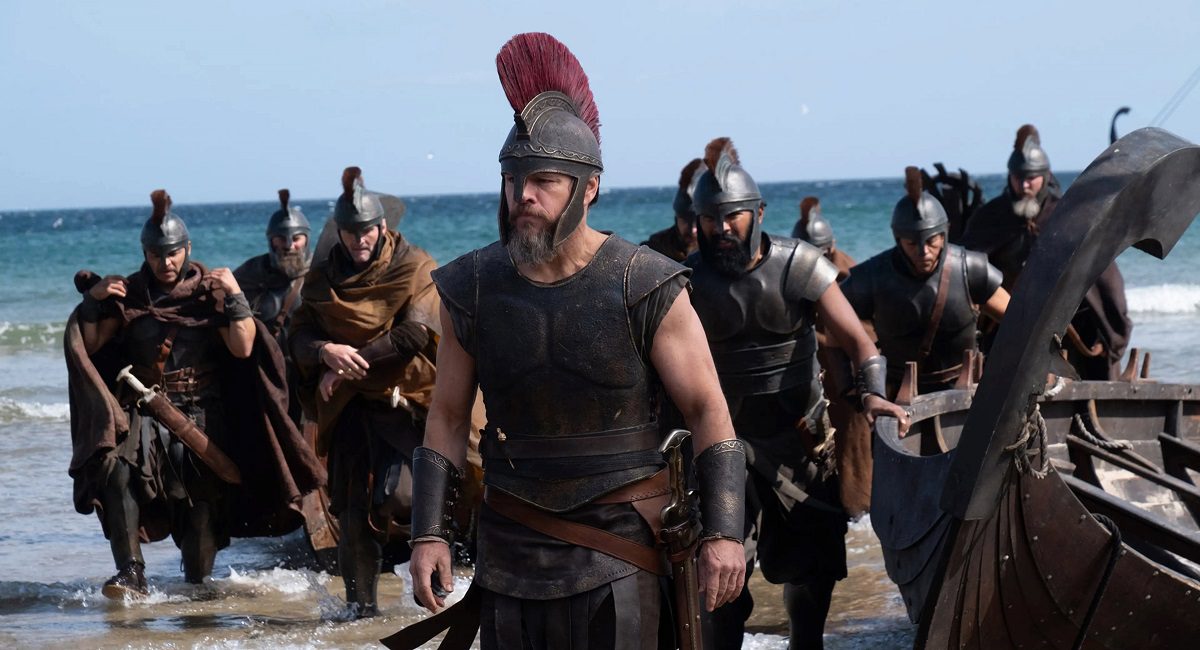
Christopher Nolan’s The Odyssey is one of the most ambitious films of 2026, bringing Homer’s ancient Greek epic to the big screen with a massive practical-production approach. Rather than relying heavily on digital environments, Nolan and cinematographer Hoyte van Hoytema traveled to real beaches, islands, caves, castles, mountains and deserts across several countries. The production ultimately covered Morocco, Greece, Italy, Iceland, Scotland and the United States, with additional underwater work associated with Malta.
The film stars Matt Damon as Odysseus, alongside Tom Holland, Anne Hathaway, Robert Pattinson, Zendaya, Lupita Nyong’o and Charlize Theron. Nolan also made history with the production because The Odyssey was shot entirely using IMAX film cameras, making the locations especially important to the movie’s visual identity.
The Odyssey Release Date
The Odyssey was released in theaters on July 17, 2026, with Universal Pictures distributing the epic adventure worldwide. The movie was written and directed by Christopher Nolan and produced by Nolan and his longtime collaborators.
You May Also Like
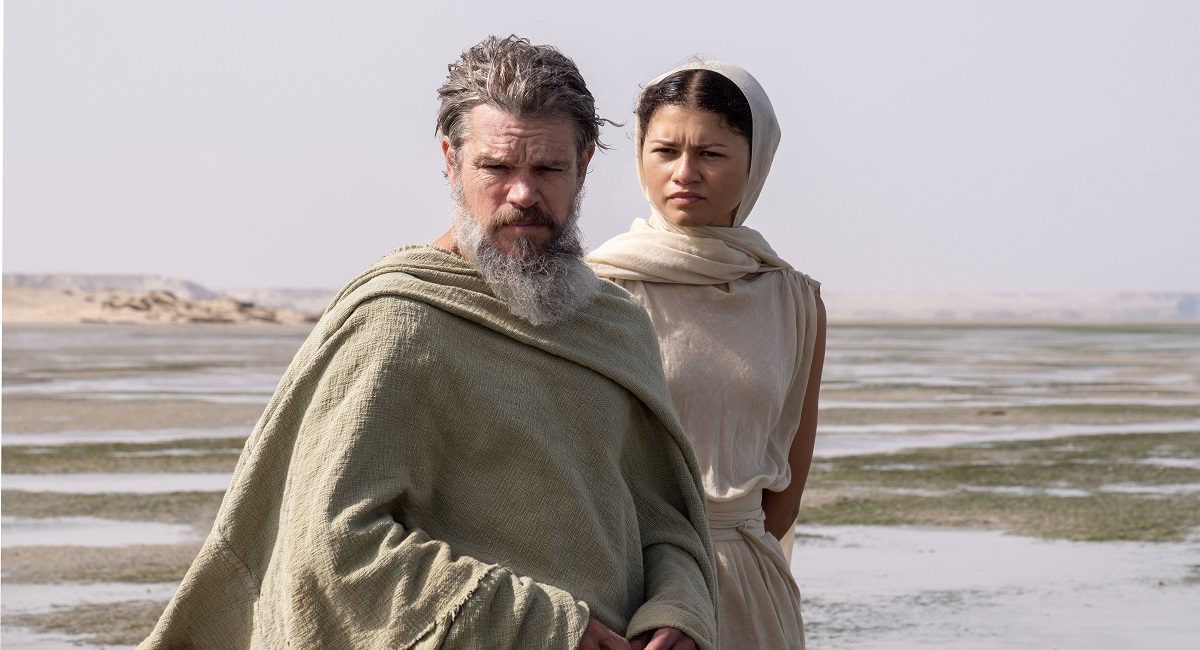
Principal photography began on February 25, 2025, and continued for 91 days before wrapping on August 8, 2025—nine days earlier than originally scheduled. What makes the production particularly impressive is that Nolan wanted the physical world to shape the movie. Instead of creating every mythical location inside a computer, the production traveled to real-world landscapes that could naturally convey the scale and danger of Odysseus’ journey.
So, where exactly was The Odyssey filmed? Here is a country-by-country look at the major shooting locations.
Morocco — Troy and the Trojan War Sequences
One of the first countries visited by the production was Morocco, where Christopher Nolan and his team filmed some of the movie’s earliest sequences.
The spectacular fortified village of Aït Benhaddou, near Ouarzazate, was used to represent ancient Troy. Its distinctive reddish mud-brick architecture and surrounding desert landscape made it a natural choice for the ancient-world setting. The location has previously appeared in numerous major productions, making it one of Morocco’s most recognizable movie landscapes.
The production reportedly expanded the existing settlement with additional structures to create the enormous city of Troy required for the film. This helped Nolan create an environment that looked like a genuine ancient city rather than a computer-generated fantasy landscape.
Other Moroccan filming locations included Marrakech, Essaouira and Tahanaoute, with additional filming farther south around Dakhla. Essaouira was used for important coastal material connected with the Trojan War and Odysseus’ departure.
Dakhla also became one of the more controversial locations connected with the production because it is in Western Sahara, a politically disputed territory. The location was nevertheless used for filming in July 2025.
Greece — The Heart of the Ancient World
It would be difficult to make a film adaptation of Homer’s Odyssey without filming in Greece, and Nolan’s production spent significant time in the country.
The main Greek shoot took place in Messenia in the Peloponnese, with filming reported in and around Pylos, Methoni, Gialova and Voidokilia Beach.
One particularly important location was Voidokilia Beach, a spectacular horseshoe-shaped beach famous for its turquoise water and surrounding hills. Nearby Nestor’s Cave was used for scenes connected with the terrifying Cyclops sequence involving Polyphemus.
The production also filmed at Methoni Castle, a dramatic medieval fortress overlooking the sea. Although the castle itself is centuries younger than Homer’s world, its rugged stone architecture and coastal position provided an extraordinary backdrop for Nolan’s ancient setting.
Another important Greek location was Acrocorinth, the ancient fortified site overlooking Corinth. The archaeological location was used for scenes associated with the world of the Greek kings and warriors.
For a film based on one of the foundational works of Greek literature, shooting on real Greek landscapes gave The Odyssey a strong connection to the geography and atmosphere of the original epic.
Italy — Favignana Becomes Ithaca
Italy provided another major part of the film’s visual identity.
The production traveled to Favignana, one of the Aegadian Islands off the coast of Sicily. In The Odyssey, Favignana was used to represent Ithaca, the homeland Odysseus spends years trying to reach. The most recognizable location was Castello di Santa Caterina, a dramatic castle positioned high above Favignana. The castle was transformed into the home of Odysseus and Penelope.
According to reports about the production, cast and crew had to make a demanding uphill journey to reach the castle during filming. Its elevated position was one of the reasons it was so attractive to Nolan: the location provides sweeping views of the surrounding sea and landscape.
Favignana was not the only Italian location used for the movie. The production also filmed across the Aeolian Islands, including Lipari, Basiluzzo and Vulcano. These islands were associated with the mythical land of Aeolia, the realm connected with Aeolus, the god of winds.
The production even used a large Viking longship for maritime filming, creating an unusual combination of modern filmmaking technology and an enormous practical vessel designed to resemble an ancient ship.
Iceland — A Darker Side of Odysseus’ Journey
The filmmakers then traveled north to Iceland, using its volcanic landscapes, mountains, beaches and rivers to create some of the more mysterious locations in Odysseus’ journey.
Among the reported Icelandic locations were Landeyjahöfn, Hjörleifshöfði, the Markarfljót River and parts of the Snæfellsnes Peninsula.
Iceland’s unusual geography was ideal for a story filled with dangerous islands, supernatural encounters and unfamiliar worlds. The black volcanic landscapes and rugged coastlines naturally create the kind of otherworldly atmosphere that would otherwise require extensive digital effects.
The production’s approach in Iceland was consistent with Nolan’s preference for physical environments: instead of constructing an entirely artificial mythical landscape, the filmmakers used places that already looked extraordinary.
Scotland — Forests, Castles and the World of Circe
Scotland was another major filming destination.
The production filmed around Moray, including Findlater Castle, Buckie Harbour, Sunnyside Beach near Cullen and Culbin Forest.
Findlater Castle provided one of the film’s most dramatic locations. Sitting on Scotland’s rugged coastline, the ruined castle has an imposing appearance that fits perfectly into Nolan’s interpretation of the ancient world.
Culbin Forest, meanwhile, offered a completely different visual environment. The forest was used for scenes associated with Circe and the strange, dangerous parts of Odysseus’ journey.
The combination of coastal cliffs, ancient ruins and dense woodland allowed Scotland to double for another mythical region without requiring the filmmakers to build everything from scratch.
Los Angeles — Studio and Controlled Filming
Although The Odyssey is famous for its international location work, not everything was filmed outdoors.
The production also used Los Angeles studio facilities, including stages at Sony Pictures Studios and Universal Studios. Some sequences required controlled environments where large-scale practical effects, water work or complex production setups could be safely achieved.
Los Angeles therefore provided the controlled counterpart to the film’s enormous location shoot. This was especially useful for scenes that could not easily be filmed on an exposed beach, mountain or open sea.
Malta — Additional Underwater Work
Malta is also associated with the production, particularly with underwater filming. Some location databases list Malta among the filming countries, while other accounts distinguish it from the six principal location countries because the main dramatic location photography was concentrated in Morocco, Greece, Italy, Iceland, Scotland and the United States.
This distinction is worth noting because online lists of The Odyssey filming locations sometimes differ depending on whether they count supplementary photography separately.
Why Did Christopher Nolan Film in So Many Countries?
The answer is closely connected to Nolan’s approach to filmmaking.
The Odyssey follows a character traveling through an enormous mythological world, so the director wanted the audience to feel the physical scale of that journey. Real locations allowed the movie to capture natural weather, oceans, mountains, caves, forests and ancient structures.
The production also used more than two million feet of IMAX 70mm film, and the movie became the first feature shot entirely with IMAX film cameras.
That makes the locations more than simple backgrounds. The mountains of Iceland, beaches of Greece, islands of Italy, deserts of Morocco and rugged coastline of Scotland were photographed as major visual elements of the story.
The Odyssey (2026) was filmed across an unusually wide range of spectacular locations. Morocco provided Troy and desert landscapes; Greece supplied authentic Mediterranean scenery and the Cyclops-related locations; Favignana in Italy became Ithaca; the Aeolian Islands represented Aeolia; Iceland supplied some of the most otherworldly landscapes; Scotland provided castles, forests and rugged coastlines; and Los Angeles handled controlled studio work.
The result is a film that attempts to make Homer’s mythical journey feel tangible and physical. Instead of creating a completely digital ancient world, Christopher Nolan used real places across Europe and North Africa to give Odysseus’ journey a sense of scale and authenticity.
With its combination of enormous IMAX photography, real ships, historic castles, remote islands, caves, beaches and mountains, the production itself became almost as ambitious as the epic journey it depicts.
Related –