Christopher Nolan’s The Odyssey takes Homer’s ancient epic and turns it into something much darker and more psychologically complicated than a conventional heroic adventure. Released on July 17, 2026, the film follows Odysseus, played by Matt Damon, as he attempts to return to Ithaca after the Trojan War. What begins as a seemingly straightforward story about a legendary king trying to get home gradually becomes a story about guilt, trauma, war, memory, responsibility and whether a man who has survived everything can actually return to the life he once knew.
The movie eventually reaches the familiar territory of Homer’s story: Odysseus returns to Ithaca disguised as a beggar, discovers that Penelope has been surrounded by suitors, reunites secretly with Telemachus, and eventually takes back his home through a brutal confrontation. But Nolan makes a major change to the traditional ending. Instead of simply restoring Odysseus to his throne and allowing the kingdom to return to normal, the movie asks whether Odysseus deserves to rule after everything he has done and everything that happened during the Trojan War.
That question becomes the emotional heart of the finale.
You May Also Like
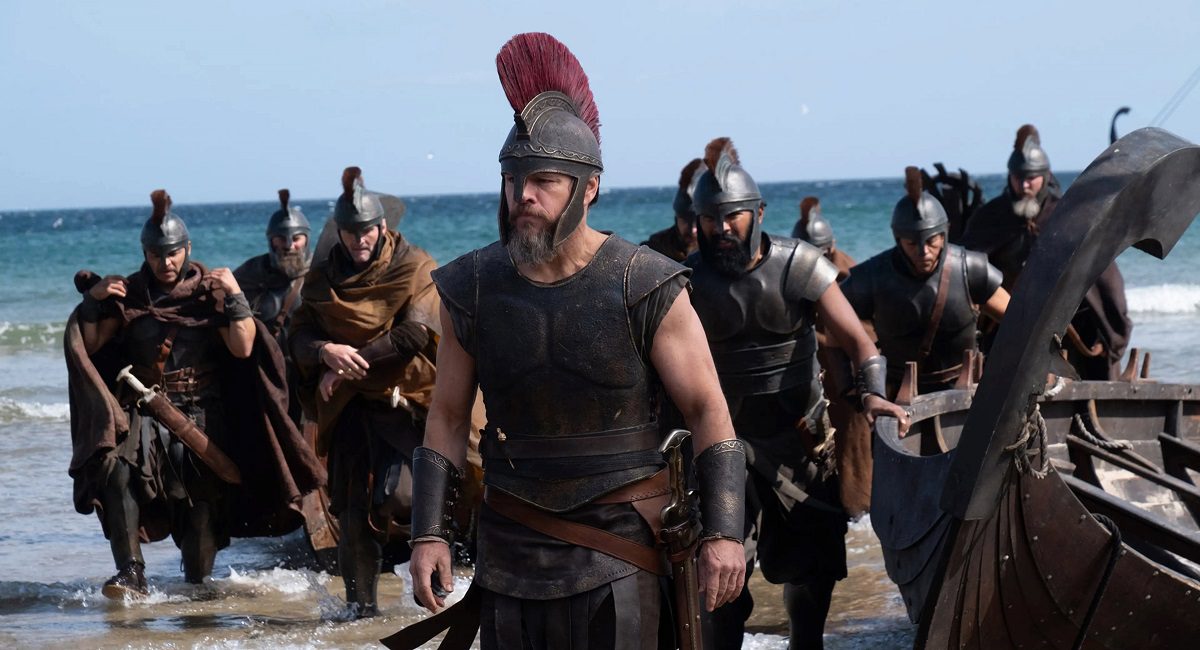

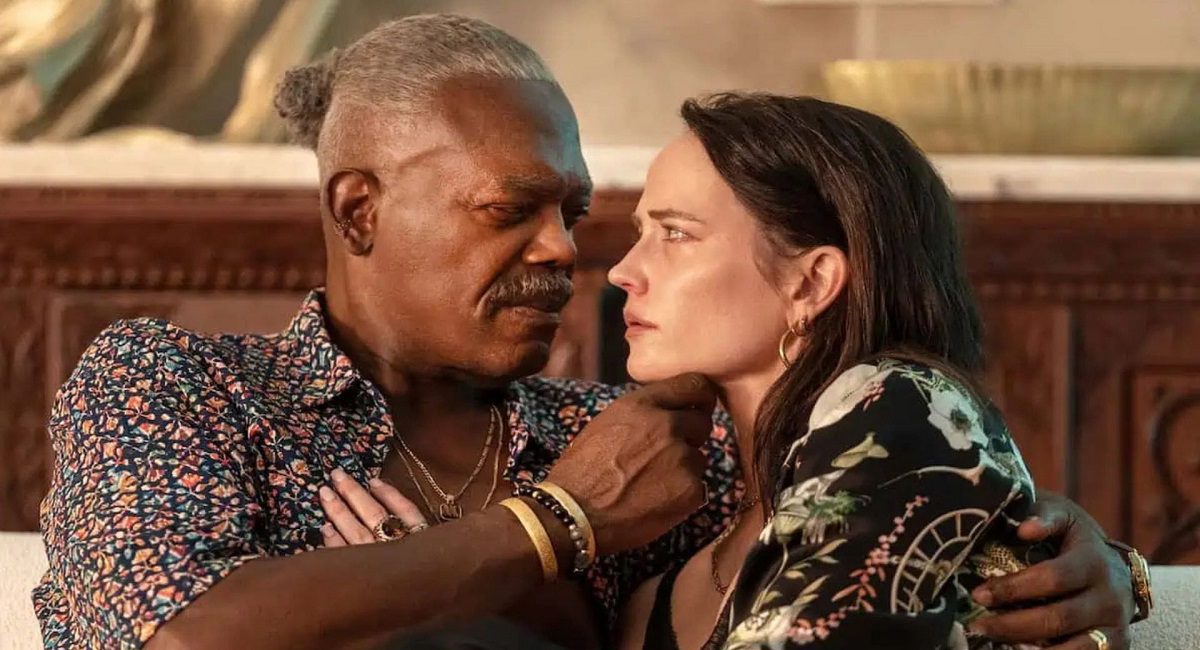

The biggest mystery comes during the final moments. Odysseus is badly wounded after the bloody confrontation with the suitors, and for a moment it appears that the legendary king may finally die just as he reaches the home he spent years trying to find. But he survives—or at least the movie strongly suggests that he does. Instead of remaining in Ithaca, however, Odysseus makes an extraordinary decision: he gives the throne to his son Telemachus and leaves Ithaca with Penelope.
The pair sail west, toward the setting sun, to fulfill Odysseus’ promise to honor the dead who never made it home.
That ending has created an important question: Is Odysseus actually alive when the movie ends, or is his final voyage meant to represent death and the afterlife? The film deliberately leaves enough ambiguity for both interpretations, but the strongest literal reading is that Odysseus survives and voluntarily chooses exile.
Here is the complete The Odyssey ending explained.
Odysseus Finally Returns to Ithaca—but He Is No Longer the Same Man
For much of The Odyssey, Odysseus is driven by one overwhelming goal: getting home. After the Trojan War, his journey becomes an exhausting sequence of disasters, supernatural encounters and psychological trials. He loses his men, confronts monsters and gods, survives captivity and spends years separated from Penelope and Telemachus.
But Nolan’s movie gradually changes the meaning of that journey.
At first, Ithaca represents everything Odysseus wants. It is his family, his kingdom, his identity and the life that existed before the war. Yet the closer he gets to Ithaca, the more obvious it becomes that he cannot simply return to being the same king who sailed away.
One of the movie’s most important ideas is that Odysseus carries the Trojan War with him. The victory that should have made him a hero instead becomes a source of guilt. His role in the destruction of Troy, particularly the deception involving the Trojan Horse, is repeatedly recontextualized. The earlier version of the event may initially feel like a brilliant military victory, but the film later forces Odysseus—and the audience—to look at what happened after the gates were opened.
The result is horrifying.
The people inside Troy are not merely enemies on a battlefield. They are civilians, families and human beings caught inside a war that Odysseus helped bring to its devastating conclusion. This is where Nolan’s interpretation becomes much more interested in the consequences of violence than in celebrating heroic conquest. Contemporary analysis of the film has similarly emphasized how Odysseus’ guilt over Troy transforms his return into something more complicated than a simple victory lap.
When Odysseus finally reaches Ithaca, he therefore does not arrive as an uncomplicated hero.
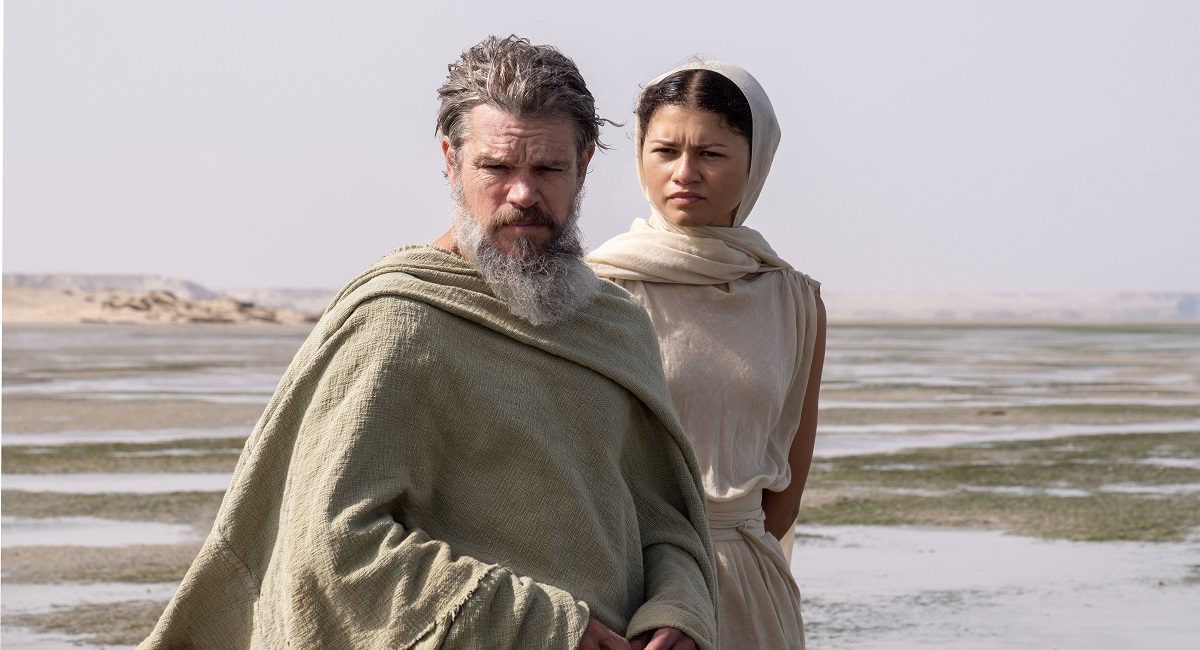
He disguises himself as a beggar and observes his own kingdom from the outside. This disguise is important because it allows him to see what Ithaca has become without the protection of his title. He sees the suitors consuming his household and pressuring Penelope to choose a new husband. He also discovers that Telemachus has grown up without the father he remembers.
Most importantly, Odysseus discovers that returning home does not erase the years that have passed.
Penelope has waited for him, but waiting has changed her. Telemachus has become a man rather than the child Odysseus left behind. And Odysseus himself has become someone haunted by the dead.
The physical journey may be almost over, but his real journey has only reached its final stage.
Penelope’s Bow Challenge Sets Up the Bloody Final Battle
The turning point comes when Penelope announces that she will choose a husband through a challenge involving Odysseus’ legendary bow. This echoes one of the most famous episodes in Homer’s original epic.
The suitors believe they finally have a chance to claim Penelope and effectively take control of Ithaca. But they do not understand that the contest is actually creating the perfect opportunity for Odysseus to reveal himself.
The challenge is simple in theory but nearly impossible in practice: the man must string Odysseus’ bow and complete the difficult shot associated with it.
One by one, the suitors fail.
Then the disguised Odysseus takes the weapon.
The moment he successfully handles the bow changes the atmosphere of the entire palace. The beggar everyone dismissed is revealed as the missing king.
What follows is not a clean heroic victory.
It is brutal.
Odysseus and Telemachus fight against the suitors, turning the palace into a battlefield. The violence is deliberately uncomfortable because Nolan does not present the massacre as a consequence-free triumph. Odysseus has returned to reclaim his home, but reclaiming it requires him to kill the men who occupied it.
This is where the movie’s central moral contradiction becomes impossible to ignore.
Odysseus wants peace, but he reaches peace through violence.
He wants to restore his family, but restoration requires another act of destruction.
He wants to return to the man he once was, but the very act of reclaiming Ithaca proves that he cannot.
The confrontation also brings Odysseus face-to-face with the consequences of what happened during the war. His revenge is personal, but the movie consistently reminds viewers that violence creates cycles rather than simply ending conflicts.
By the end of the battle, Odysseus has technically won.
The suitors are defeated. Ithaca is his again.
But the question is no longer whether he can take back his kingdom.
The question is whether he should keep it.
Does Odysseus Die After the Battle? The Movie’s Biggest Mystery Explained
This is the part of the ending that has generated the most discussion.
After the battle, Odysseus is seriously wounded. For a brief period, the film makes his survival uncertain. Considering how much punishment he has endured throughout the story, the possibility that he could finally die after reaching Ithaca feels tragically appropriate.
After all, Odysseus has spent years fighting to return home.
Perhaps he reaches it only to die there.
But the movie does not ultimately present his death as a confirmed fact.
Instead, Odysseus survives.
The clearest evidence comes from what happens next: he speaks to Penelope, makes the decision concerning Telemachus and eventually appears aboard the ship with Penelope as they leave Ithaca. He is shown injured and bandaged, but alive. One particularly important line is Odysseus’ response to the idea of death: “Not death. Exile.”
That line is essentially the key to the ending.
Odysseus is not choosing death.
He is choosing to live with what he has done.
This is a major difference.
Death would provide an easy ending. His suffering could end, his guilt could disappear and his story could become a heroic legend. But exile forces Odysseus to continue living with his memories.
That is much more painful.
The movie nevertheless deliberately keeps the final voyage mysterious. Odysseus and Penelope sail toward the west, toward the setting sun. In Greek mythology, the west can carry associations with death and the world beyond the living. The fact that Odysseus is badly wounded and that the film moves between emotionally symbolic images makes it possible to interpret the journey as something more than a literal sea voyage.
So, is Odysseus really alive?
The safest answer is yes, literally—but Nolan intentionally leaves the door open to a symbolic interpretation of his fate.
The movie does not show him dying.
Instead, it shows him leaving.
That distinction matters enormously.
Why Does Odysseus Give the Throne to Telemachus?
Perhaps the biggest surprise in Nolan’s adaptation is not Odysseus’ survival. It is his decision to give up Ithaca.
After everything he has suffered to get back, most viewers expect the story to end with Odysseus restored as king. That is essentially where the traditional heroic structure points. Homer’s original ending reunites Odysseus with Penelope and restores order to Ithaca, with Athena intervening to stop further bloodshed.
Nolan chooses something very different. Telemachus becomes king. Odysseus willingly steps away.
Why?
Because Odysseus finally understands that his return cannot undo the past. The Trojan War happened. His men died. Troy was destroyed. His family spent years without him. The suitors were killed. And Odysseus himself participated in decisions that caused enormous suffering.
If he simply puts the crown back on his head and declares everything restored, then the ending would suggest that victory erases responsibility.
Nolan refuses to do that. Instead, Telemachus represents a new generation.
He is the son who grew up without his father. He has inherited Ithaca, but he has also inherited the consequences of his father’s choices. By placing Telemachus on the throne, Odysseus effectively says that the future should belong to someone who did not create the wars of the past.
This is why the ending feels less like a traditional victory and more like an act of responsibility.
Odysseus has spent the entire film trying to get back what he lost. At the end, he realizes that getting something back does not necessarily mean keeping it. That is the shocking final decision. He can return home, but he cannot return to the past. He can be reunited with Penelope, but he cannot erase the years she spent waiting.
He can see Telemachus again, but he cannot become the father who was present during his son’s childhood. He can reclaim Ithaca, but he cannot pretend the kingdom is untouched by his absence. So Odysseus chooses another path. He gives his son the crown.
And he leaves.
Why Do Odysseus and Penelope Sail West?
The final voyage is not simply an escape.
It is the fulfillment of a promise.
Throughout the movie, Odysseus is haunted by the people who died during his journey and by the soldiers who never returned from the Trojan War. His encounters with the dead reinforce the idea that he has unfinished business with those he left behind.
The prophecy and spiritual elements of the story ultimately lead him toward the idea that he must travel west and honor the fallen. Rather than treating his survival as the end of his responsibility, the film makes survival itself a responsibility.
This changes the meaning of the word “home.” For most of the movie, home means Ithaca. At the end, home becomes something less geographical. Odysseus can love Ithaca without living there. He can love Penelope without remaining king. He can be Telemachus’ father without ruling over his son’s kingdom.
And he can finally move forward without pretending that the past never happened. Penelope’s decision to leave with him is equally important. For years, Penelope has been portrayed as the person waiting for Odysseus to come home. But the ending gives her agency. She is not simply waiting anymore. She actively chooses to accompany him.
That makes their final voyage feel like a new chapter rather than a repetition of the old one.
There is also an important connection to the sun.
Earlier in the story, Penelope had expressed a desire to escape the destruction associated with war and sail toward the sun. The final sequence echoes that idea as Odysseus and Penelope sail west, essentially chasing the setting sun. The imagery connects the beginning and end of their relationship while transforming the meaning of the journey.
At the beginning, sailing away would have meant escaping the war before it happened.
At the end, sailing away means accepting responsibility for what the war became.
That is one of the movie’s most powerful reversals.
The Real Meaning of the Ending: Odysseus Wins Ithaca but Loses His Old Identity
The easiest way to misunderstand The Odyssey is to see it only as a story about a hero trying to get home.
Nolan’s ending suggests that the real story is about what happens when someone finally gets there.
Odysseus succeeds.
He survives the monsters.
He survives the gods.
He survives the sea.
He survives captivity.
He survives the Trojan War.
He survives the battle with the suitors.
He even survives the wounds that nearly kill him at the end.
Yet survival does not mean restoration.
That is the emotional point of the finale.
Odysseus is alive, but the old Odysseus is gone.
The king who sailed to Troy believed intelligence and courage could solve any problem. The man who returns has learned that cleverness can also create catastrophe. The Trojan Horse was brilliant, but its brilliance led to destruction. His victories made him famous, but his victories also left him surrounded by ghosts.
This is why his decision to leave Ithaca is not cowardice. It is the opposite. Odysseus finally accepts that he cannot hide behind the title of “hero.” He has to live as a human being who made terrible decisions. The ending therefore transforms exile into a form of accountability. He does not run away because he has failed. He leaves because he understands that remaining king would allow him to turn his return into another form of denial.
Telemachus can build the future. Odysseus can confront the past. Penelope can choose her own path. And Ithaca can move forward. That is much more complicated than the traditional “hero returns home” ending.
How Nolan’s Ending Differs From Homer’s Original Odyssey
The differences between Nolan’s movie and Homer’s poem are particularly important because they explain why so many viewers were surprised by the final scenes.
In Homer’s Odyssey, Odysseus returns to Ithaca, defeats the suitors, reunites with Penelope and ultimately encounters his father Laertes. The families of the dead suitors seek revenge, but Athena intervenes and prevents the conflict from becoming another cycle of bloodshed.
Nolan instead reshapes the conclusion around guilt and restitution.
The film retains major elements of the classic ending, including the bow challenge and the destruction of the suitors, but it moves away from the idea that killing the suitors automatically restores order. The movie’s ending places much greater emphasis on what Odysseus owes to the dead.
Instead of ending with Odysseus simply reclaiming his throne, Nolan has Telemachus crowned king while Odysseus and Penelope leave Ithaca. Contemporary reporting on the film specifically highlights this as one of the adaptation’s most significant departures from Homer.
There is another important difference in the emotional structure. Homer’s ending is ultimately concerned with restoring order. Nolan’s ending is concerned with acknowledging that order may never fully return. The ancient poem can end with Athena stopping another war. The film looks beyond that moment.
Odysseus reflects on the rise and fall of civilizations and the way humanity repeatedly forgets the lessons of its own destruction. The ending therefore becomes bigger than Ithaca. It becomes a meditation on history itself.
Civilizations rise.
Civilizations collapse.
People rebuild.
Then generations forget why the previous civilization collapsed.
And the cycle begins again.
That idea makes the final voyage much more significant.
Odysseus is not simply leaving Ithaca.
He is leaving behind one historical age.
What Does the Final Scene Really Mean?
The final scene can be interpreted on several levels.
On the most straightforward level, Odysseus and Penelope are physically leaving Ithaca. Odysseus has survived his wounds, Telemachus is now king, and the couple is traveling west to honor the dead. This interpretation is supported by the fact that Odysseus is shown alive aboard the ship rather than being explicitly shown dying.
On a symbolic level, however, the scene can be read as Odysseus’ transition from one existence into another.
The setting sun is especially important.
The sun disappears every evening, but it returns the next morning.
That makes the image simultaneously about endings and beginnings.
Odysseus’ life as king ends.
His new life begins.
The war ends.
But its consequences continue.
The old world disappears.
A new generation takes control.
Telemachus represents the sunrise of that new generation, while Odysseus and Penelope sailing west represent the closing chapter of the old one.
The final monologue reinforces this interpretation. Odysseus looks toward a future in which the world he knows will eventually disappear and humanity will rebuild again. The film’s closing thought is therefore not simply “Odysseus lived happily ever after.” Instead, it suggests that humanity is trapped in a cycle of destruction, forgetting and renewal.
This also explains why the movie refuses to give audiences a perfectly comfortable ending.
A conventional blockbuster would end with Odysseus back on his throne, Penelope beside him and Telemachus safely at home.
Nolan’s version asks a harder question:
What if getting home is not the same thing as being home?
Odysseus spent years trying to reach Ithaca, only to discover that Ithaca cannot give him back the person he used to be. His real victory is not becoming king again. His real victory is accepting that he has changed. And perhaps that is why the movie’s final decision is so powerful.
Is Odysseus Alive, and Why Does He Choose Exile?
So, is Odysseus really alive at the end of The Odyssey (2026)?
Yes—the literal reading is that he survives. He is badly wounded during the battle, but he is later shown alive and leaving Ithaca with Penelope. The movie does not explicitly show his death. His line, “Not death. Exile,” directly points toward survival rather than an actual death.
However, Nolan deliberately makes the ending ambiguous enough to support a symbolic interpretation. Odysseus’ voyage toward the west and the setting sun can represent a journey toward death, the afterlife or simply the end of his old identity. The movie does not force the audience to choose one interpretation.
The more important question is not whether Odysseus physically survives.
It is what kind of life he chooses after surviving.
And his answer is exile.
He gives Ithaca to Telemachus because he believes the kingdom belongs to the future rather than the past. He leaves with Penelope because their relationship can no longer simply return to what it was twenty years earlier. And he travels west because he still owes something to the people who died along the way.
The Odyssey has always been a story about getting home. Christopher Nolan’s The Odyssey turns that idea upside down. Odysseus finally gets home—and then voluntarily leaves it. That is why the ending is so unexpected. The journey does not end when Odysseus reaches Ithaca.
It ends when he realizes that home is not a place he can reclaim unchanged.
His crown belongs to Telemachus. His past belongs to history. His guilt belongs to him. And his future is somewhere beyond the horizon.
As the film closes on Odysseus and Penelope sailing west into the fading light, the story becomes less about whether the legendary king survived and more about whether humanity can learn from the destruction it repeatedly creates. The final image suggests that darkness is never permanent, because another dawn will eventually arrive—but it also warns that people may forget the lessons of the darkness that came before.
That makes The Odyssey ending both hopeful and haunting.
Odysseus survives—but he does not return to the life he once wanted. He chooses exile, Penelope chooses to go with him, Telemachus becomes king, and the legendary hero sails toward an uncertain future. Whether that final voyage is literally real or carries the imagery of an afterlife is left deliberately open.
And that ambiguity may be exactly what Christopher Nolan wants audiences to debate long after the credits roll.