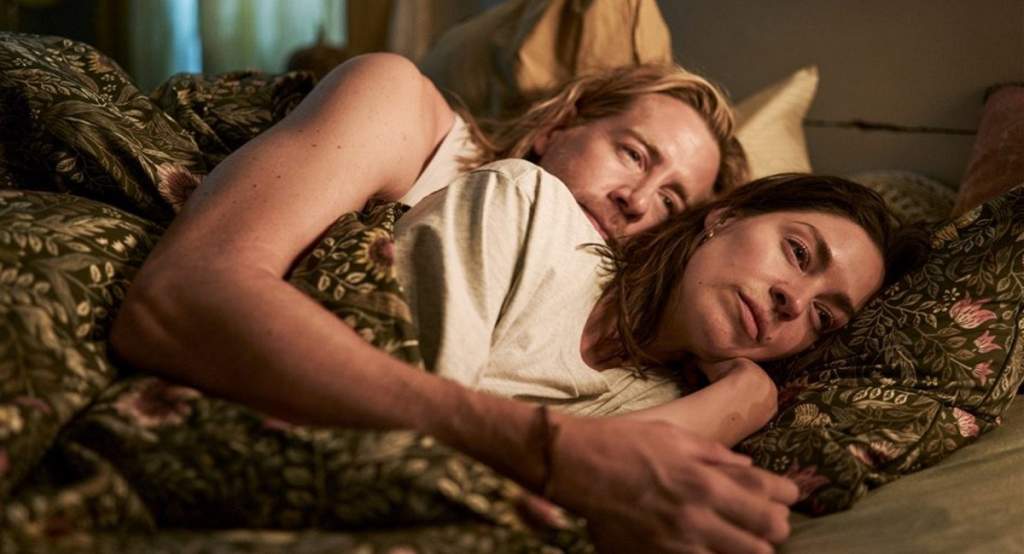

Just Play Dead is a 2026 crime thriller built around one deceptively simple question: what happens when two people who both plan a murder realize they are playing the same game? Directed by Martin Campbell and written by Dan Gordon, the film stars Samuel L. Jackson as wealthy criminal mastermind Jack Wolfe and Eva Green as his wife Nora Wolfe. Eoin Macken and Jason Fernández also appear in the story as two men pulled into Nora’s increasingly complicated plans.
The movie was released in select U.S. theaters on August 28, 2026, with digital/on-demand availability scheduled for September 1, 2026. Current listings give the film a runtime of approximately 1 hour and 56 minutes, although some listings show a shorter runtime.
At the center of the story is Jack’s outrageous escape plan. Facing pressure from federal authorities because his fortune comes from criminal activity, Jack decides that the best way to disappear is to fake his own death. His life insurance policy is worth $30 million, and his plan is to make himself legally dead, allow Nora to collect the money and eventually split the fortune with her. But Jack also needs someone to take the blame for his supposed murder, and Nora’s lover Chad becomes the perfect target.
You May Also Like

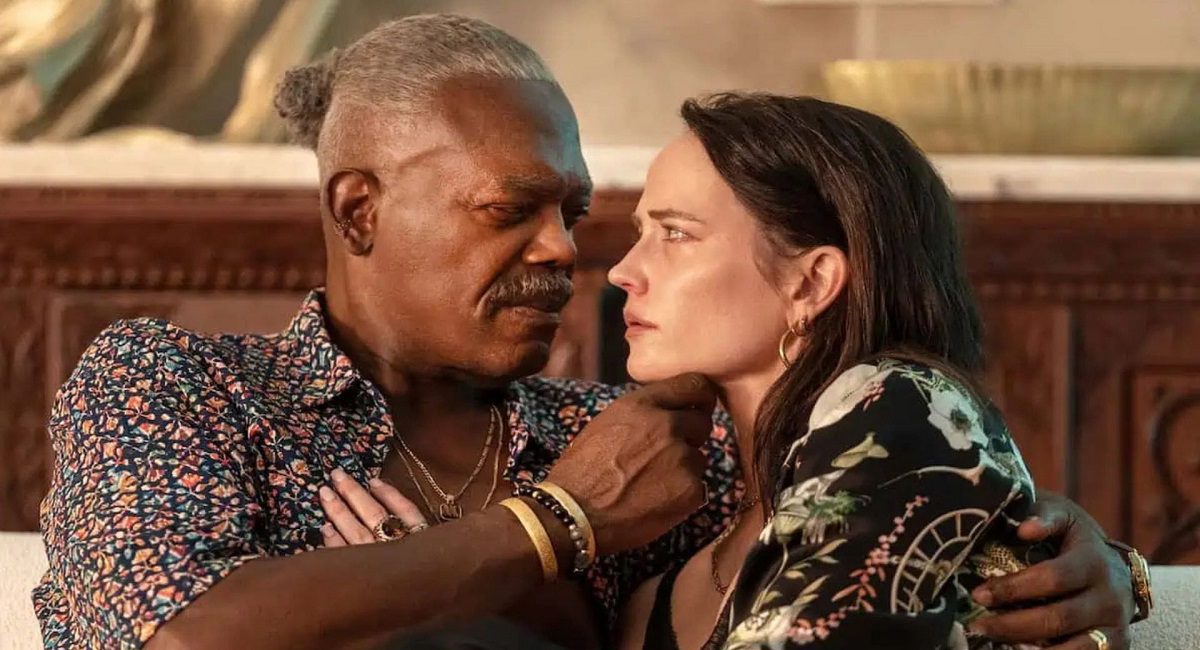

The problem is that Nora has already decided she wants Jack gone for good.
And once she realizes that Jack has effectively handed her the perfect opportunity to make his fake murder into a real murder, the entire plan turns into a battle of manipulation, betrayal and double-crosses.
So, who really dies? Does Jack’s fake-death plan work? Does Nora get the $30 million? And who wins the final yacht confrontation? Let’s break down the ending and the story step by step.
Jack Wolfe’s Fake Death Plan Turns a Marriage Into a Murder Game
Jack Wolfe is introduced as the kind of criminal who believes he can outthink everyone around him. He has accumulated enormous wealth through illegal activities, but his biggest problem is that federal authorities are getting closer to exposing him. Jack understands that eventually the money, the lifestyle and his freedom could all disappear.
Instead of surrendering, he creates an escape plan that sounds almost absurdly simple: die without actually dying.

Jack intends to stage his murder, allowing his wife Nora to collect the $30 million insurance payout. The arrangement is supposed to benefit both of them. Jack disappears, Nora becomes the grieving widow, and eventually they can divide the money. More importantly for Jack, the fake murder creates a believable explanation for his disappearance while potentially putting the authorities on the wrong trail.
But Jack has another part of the scheme. He wants Nora’s lover, Chad, to look responsible.
Chad is essentially the perfect fall guy. He is connected romantically to Nora, he has a reason to resent Jack and he is not equipped to understand the scale of the criminal game into which he has accidentally stepped. Jack assumes that once his supposed murder occurs, investigators will naturally look toward Chad.
The problem is that Jack doesn’t understand just how badly Nora wants to escape from him. Nora isn’t simply an unhappy wife. She is trapped in a relationship with a ruthless man who controls nearly every aspect of their lives. Jack may think of their marriage as a business partnership, but Nora sees an opportunity. If Jack is already willing to fake his own death, why should she help him fake it?
Why not make it real?
That question changes the entire movie.
Nora begins considering a plan in which Jack actually dies, Chad becomes the apparent killer and she walks away with the entire fortune rather than sharing it with Jack. The official synopsis confirms that Nora’s objective is precisely this: kill Jack for real, frame Chad and keep the money for herself.
What makes the setup entertaining is that neither husband nor wife is innocent. Jack is trying to manipulate Nora. Nora is trying to manipulate Chad. And both of them believe they are the smartest person in the room. That becomes the movie’s central joke and its central source of suspense.
Nora Uses Chad, But Jack Is Already Several Steps Ahead
Nora’s relationship with Chad initially appears to be the emotional escape route from her marriage. Chad is very different from Jack. He isn’t a criminal mastermind, and he doesn’t appear to understand the dangerous world surrounding Nora’s husband. That makes him useful.
Nora begins pulling Chad deeper into her plan, encouraging him to become involved in Jack’s supposed death. She needs him to believe that the murder can be carried out and that they can eventually escape together with the money. But Nora is hiding something important.
She doesn’t actually intend for Chad to become a partner who shares the fortune equally. She wants him to become the person who takes the blame.
This is where the film starts layering deception on top of deception. Jack’s original plan was already designed to frame Chad. Nora then takes Jack’s idea and turns it against him. Instead of helping Jack fake his death, she wants to use his own scheme as the framework for killing him.
For a while, it looks as though Nora has finally gained control.
She knows Jack’s plan.
She knows what he wants.
She knows the insurance money is waiting.
And she has Chad available as the perfect scapegoat. But Jack has one advantage that Nora repeatedly underestimates: he doesn’t trust anybody. Jack knows his wife is unhappy. He knows about Chad. And because he is a criminal who has survived by anticipating betrayal, he is already prepared for the possibility that Nora might turn against him.
The film consequently becomes a strange psychological chess match. Every time Nora thinks she has created a trap for Jack, the audience discovers that Jack has anticipated at least part of it. This is why the movie’s structure repeatedly shifts between plans and counterplans. Rather than following a straightforward murder mystery, Just Play Dead is interested in showing how the same event can have completely different meanings depending on who is planning it.
Jack thinks he is staging a fake murder. Nora thinks she is turning the fake murder into a real one. Chad thinks he is helping Nora. And the authorities are attempting to make sense of evidence that has been deliberately manufactured by people who don’t want the truth discovered.
As the plans begin collapsing into one another, evidence is destroyed and the characters become increasingly desperate. The official plot description specifically notes that evidence goes up in flames before the story reaches its explosive yacht showdown.
The crucial point is that Jack doesn’t simply sit around waiting for Nora to kill him. He creates his own counterattack. Rather than allowing Nora and Chad to control the situation, Jack begins turning them against one another. And that is when the supposedly perfect murder plan starts falling apart.
Jack’s Biggest Trap: Turning Nora and Chad Against Each Other
The most important twist in the second half of Just Play Dead isn’t simply another murder attempt. It is Jack’s realization that Nora’s greatest weakness is her dependence on other people.
Nora needs Chad.
She needs him to believe her.
She needs him to act on her instructions.
And she needs him to remain convinced that the two of them have a future together once Jack is gone.
Jack attacks that trust.
Rather than confronting Nora directly, he manipulates the circumstances around her and Chad so that they begin questioning one another. The more they discover about the lies surrounding Jack’s supposed death, the harder it becomes for either of them to know who is telling the truth.
This is where the title Just Play Dead becomes particularly appropriate. Everyone in the movie is essentially performing. Jack performs the role of a man who is about to die. Nora performs the role of a loyal wife. Chad is pushed into performing the role of a murderer. Even the supposed evidence is part of a performance designed to convince investigators that something happened that never actually happened—or to hide what really happened when the plan finally turns deadly.
The film’s central irony is that Jack originally believes he has created the perfect fake death because he understands how people think. But Nora knows him better than almost anyone. She knows his habits, his arrogance and his need for control. So Nora’s counter-plan is dangerous precisely because it exploits Jack’s confidence.
She doesn’t need to defeat him physically. She only needs to convince him that he is still in control. Meanwhile, Jack’s counterattack works because Nora has the same weakness in reverse. She becomes increasingly confident that she has manipulated everyone around her.
The result is a chain reaction. Chad realizes that the situation is far more dangerous than Nora originally suggested. Nora realizes Jack may know more than he should. Jack continues moving pieces around the board while trying to preserve his original objective: escape with his money and make sure the authorities believe he is dead.
The $30 million insurance payout remains the prize at the center of everything. But by this stage, the money has become almost secondary. The characters are no longer simply fighting for wealth. They are fighting to survive. And that brings the story to its final location.
The Yacht Showdown: Who Really Dies?
The final confrontation takes place aboard a yacht, turning the movie’s tropical setting into the stage for its most dangerous sequence. The official synopsis describes the climax as an explosive yacht showdown, with Nora and Chad desperately trying to overcome Jack after the various schemes unravel.
By this point, the fake-death plan has become almost impossible to separate from the real murder plot. Jack’s original intention was to disappear. Nora’s intention was to make him genuinely disappear. Chad has become trapped between the two. The final confrontation is therefore less about one character simply shooting another and more about which version of the story will survive.
Jack wants the world to believe he is dead. Nora wants the world to believe Jack was murdered by Chad. Chad wants to survive long enough to prove he was manipulated. The yacht becomes the perfect setting because there is nowhere easy to hide and the characters have nowhere left to retreat.
The various schemes finally collide, and the film reveals the true nature of Jack and Nora’s relationship: neither one was ever genuinely planning a clean escape for the other. Their marriage has effectively become a criminal partnership in which each partner is waiting for the perfect moment to betray the other.
The final sequence also reinforces why Jack has been able to survive for so long. He is ruthless, suspicious and willing to sacrifice anyone around him. Nora is equally calculating, but she has one disadvantage: she has allowed her desire for freedom and revenge to make her believe that Jack is finally vulnerable. That assumption proves dangerous.
The confrontation becomes chaotic, with the characters forced to make decisions without knowing exactly which pieces of the original plan remain intact. The yacht itself becomes part of the danger as the violence escalates. And this is where the movie’s biggest question is answered.
Jack’s fake death does not go exactly according to his original plan.
The events on the yacht ultimately turn the fake-death scheme into a genuine fight for survival, and the movie deliberately keeps the audience uncertain about which character has managed to stay one step ahead.
The most important thing to understand about the ending is that the real victory isn’t simply about who physically survives the yacht. It is about who manages to control the story that comes afterward.
That distinction is essential to understanding the final twist.
Does Jack Die or Does Nora Die?
The short answer is: Jack is not simply killed according to Nora’s original plan, and Nora’s plan to walk away cleanly with the entire fortune also collapses.
The film intentionally plays with the audience’s expectations because the entire story has trained us to question every apparent death and every piece of evidence. Jack spends the movie trying to convince everyone that he is dead. Nora spends the movie trying to make sure that he actually is.
Therefore, when the climax arrives, the question isn’t merely “Who pulled the trigger?” It is “Whose version of the murder survives?”
Jack’s greatest weapon is his ability to manipulate appearances. He understands that in a case involving a $30 million insurance policy, the physical truth is only one part of the problem. The investigators also need a believable explanation of what happened. That is why the evidence matters so much.
And it is why the destruction of evidence during the final act is significant. The characters aren’t just trying to kill each other. They are trying to erase the version of events that could send them to prison.
Nora’s plan ultimately fails because she cannot completely control the chain of consequences created by Jack’s original scheme. Chad becomes increasingly aware that he has been used, and Jack’s traps force the two lovers into a situation where their trust begins collapsing.
This is the film’s final irony. Nora wants to escape Jack. But by using Jack’s own methods—manipulation, deception and framing—she becomes trapped inside the same world he created. Jack, meanwhile, discovers that the fake death he designed as his ultimate escape has become a genuine threat to his life.
In other words, the plan works too well. Everyone begins pretending to be something they are not, until the performance becomes impossible to control. The final confrontation leaves the characters’ carefully constructed identities in ruins.
And that is why the ending feels less like a traditional mystery reveal and more like the final move in a long-running game of betrayal. The title’s phrase “Just Play Dead” becomes almost a philosophy for Jack. If you can make everyone believe you are dead, you can potentially escape the consequences of your life.
But the movie ultimately suggests that a person who builds his entire life around deception cannot easily control what happens once everyone else starts lying too.
What the Final Twist Really Means for Jack, Nora and the $30 Million
The biggest takeaway from the ending is that neither Jack nor Nora truly wins in the way they imagined.
Jack begins the movie believing that money can buy him an escape. Nora believes that Jack’s death can give her freedom. Chad believes that Nora genuinely wants him. All three assumptions are gradually destroyed.
Jack’s $30 million insurance policy is the object that starts the entire chain reaction, but the money becomes almost like a curse. Instead of bringing freedom, it gives Jack and Nora another reason to betray one another.
This is what makes the ending work thematically. Jack doesn’t simply want to live. He wants to live without consequences. He wants the money, his freedom and the ability to disappear while making someone else responsible. Nora doesn’t simply want Jack dead.
She wants to inherit the life she believes she deserves after years of living under his control. But both characters make the same mistake: they assume that they can completely control other people. They can’t. Chad becomes a wild card. The authorities become another threat.
And every lie creates another lie that needs to be maintained. The movie’s final yacht sequence therefore becomes the logical conclusion of the entire story. Once Jack’s fake death, Nora’s real murder plan and Chad’s framing scheme collide, there is no longer any clean way for one character to walk away untouched.
The film’s structure also explains why the story contains so many apparent twists. Critics have noted that Just Play Dead uses a deliberately convoluted, nonlinear approach, with extensive exposition and multiple double-crosses. That can make the ending feel deliberately slippery.
But the basic idea remains straightforward: Jack wants to fake his death; Nora wants to turn that fake death into a real one; Jack discovers the betrayal and retaliates; Chad becomes trapped between them; and the entire scheme explodes into the final yacht confrontation.
The ultimate lesson is that neither Jack nor Nora can maintain control forever. Jack’s greatest strength—his ability to anticipate betrayal—is also his weakness because he lives in a world where everyone assumes betrayal is inevitable.
Nora’s greatest strength—her ability to manipulate people—is also her weakness because eventually the people she manipulates stop trusting her.
And Chad’s greatest weakness—his lack of experience with criminals like Jack—is also what makes him unpredictable. The $30 million, meanwhile, represents the temptation that keeps everyone moving forward even after the plan has become obviously dangerous.
By the end, the question isn’t really whether $30 million is enough to justify murder. It is whether any amount of money can buy freedom when every person involved knows that the others are willing to kill for it.
That is the darker joke at the center of Just Play Dead. Everyone wants to disappear. Nobody wants to be the person left behind holding the blame. The movie’s ending takes that idea to its extreme. Jack’s fake death becomes the catalyst for a genuine life-or-death struggle, Nora’s attempt to control the murder collapses into chaos, and Chad is forced to confront just how badly he has been manipulated.
So if you’re asking “Who really dies—Jack or Nora?”, the movie’s answer is deliberately tied to its larger theme: death is only part of the deception. The real battle is over who controls the truth afterward.
And that is why the final twist is less about a simple body-count reveal and more about the collapse of the elaborate game Jack and Nora have been playing from the beginning. After all, Jack’s entire strategy was built around one belief:
If everyone thinks you’re dead, you can start over.
But Just Play Dead ultimately shows the danger of that idea. Sometimes the hardest part isn’t convincing the world that you’re dead. It’s surviving the people who know you’re still alive.
Related – Where Was Just Play Dead (2026) Filmed? All Shooting Locations