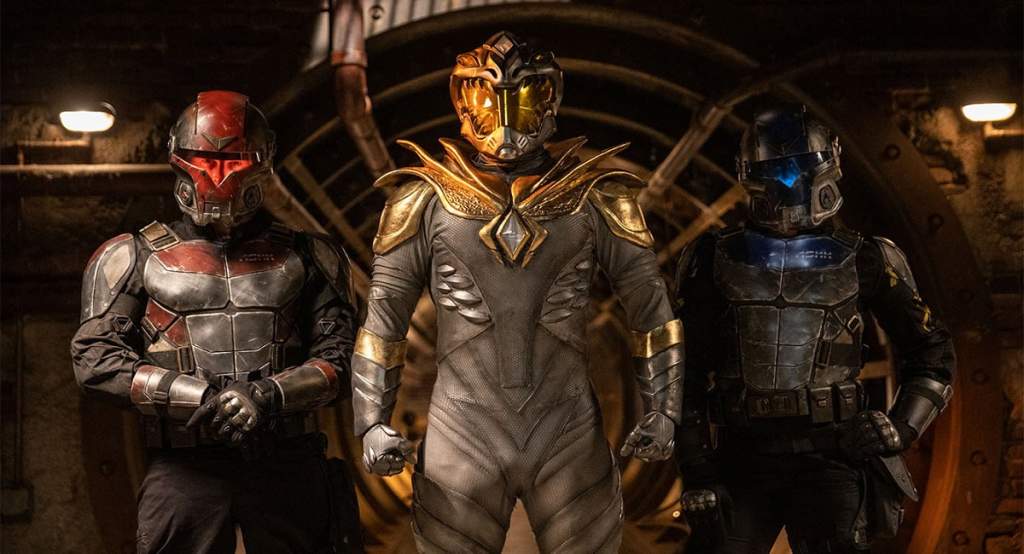
Legend of the White Dragon is a superhero action-fantasy film built around a simple but emotional question: what happens when a hero loses everything—including his reputation—and is forced to become a hero again? Released in U.S. theaters on August 28, 2026, the movie stars Jason David Frank as Erik Reed, a former superhero known as the White Dragon. The film was created as an original universe rather than a Power Rangers story, although its mature tokusatsu-style action and several familiar faces make the connection obvious to longtime fans.
The movie begins three years after a catastrophic battle known as Dark Day. Erik Reed had once been the protector of Virtuo City, but after a devastating confrontation with the ancient overlord Ashtagor, the city was left in ruins and enormous loss of life was blamed on the White Dragon. Erik’s identity was exposed, his powers were lost when the Dragon Crystal was shattered, and he became a fugitive rather than a celebrated hero. The film’s central conflict begins when Erik secretly returns to the city, hoping to clear his name and reconnect with the family he has been separated from.
But Erik’s return does not bring the peaceful reunion he wants. A new enemy called Dragon Prime has emerged, and unlike a villain interested simply in conquering the city, Dragon Prime is driven by personal revenge. The villain has a connection to the broken Dragon Crystal and believes Erik must pay for the destruction caused during Dark Day. As Erik is dragged back into the world he tried to escape, he realizes that protecting his family and confronting Dragon Prime may be impossible without becoming the White Dragon once again.
You May Also Like

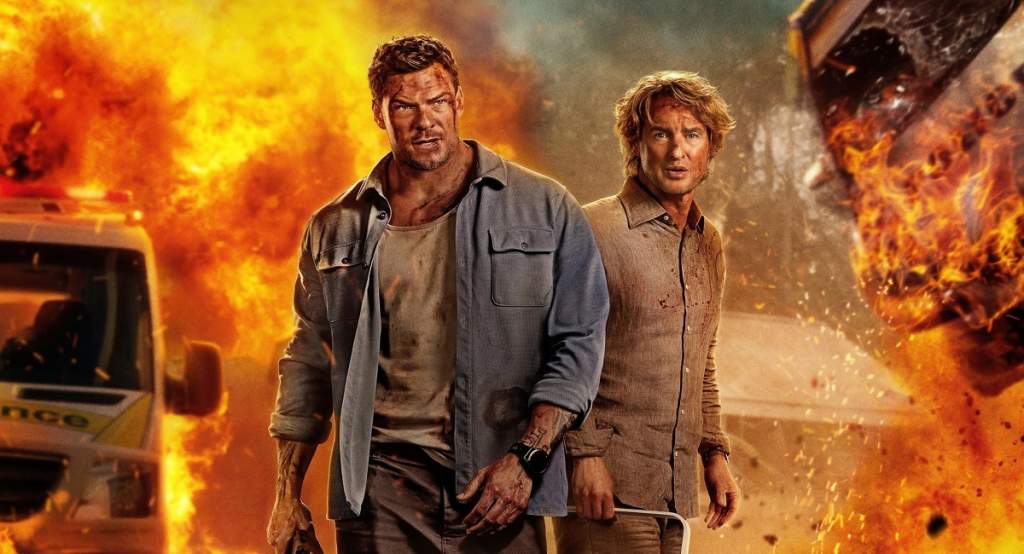

What makes the ending especially significant is that the final battle is not simply about which armored hero is stronger. It is about whether Erik can finally stop allowing guilt and public hatred to define him. The climax brings together the movie’s ideas about redemption, family, revenge and the responsibility that comes with power.
Dark Day Changed Erik Reed Forever
To understand the ending, it is important to understand what happened before the main events of the movie. Erik Reed was once a hero who possessed the power of the White Dragon through a mystical Dragon Crystal. His abilities allowed him to transform into the armored White Dragon, giving him extraordinary strength and combat abilities. But during the enormous battle against Ashtagor, everything went wrong. The city suffered catastrophic destruction, innocent people died, and the Dragon Crystal itself was broken into two pieces.
The public did not see Erik as the hero who had tried to save them. Instead, he became the person associated with the disaster. His identity was exposed, and the authorities began treating him as a fugitive. Erik disappeared from Virtuo City and spent roughly three years living in hiding. The physical loss of his powers was only part of his punishment. The greater wound was losing his family and watching the people he once protected turn against him.
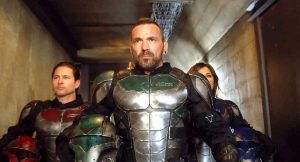
That is why Erik’s return is not presented as a traditional superhero comeback. He is not eager to put the armor back on. In fact, the White Dragon identity represents everything he has lost. Becoming the White Dragon again means confronting Dark Day all over again, including the deaths, the destruction and the hatred directed toward him.
The movie therefore gives Erik a more personal reason to return. He wants to see his wife Rebecca and his daughter Ashley again, but he also wants to prove that he was not the monster the city believes him to be. His daughter Ashley is particularly important to the emotional side of the story because Erik has missed years of her life while hiding.
However, Erik’s attempt to remain hidden eventually fails. His presence draws attention, and the authorities begin closing in. At the same time, Dragon Prime is preparing his own attack.
The movie gradually reveals that Dragon Prime is not simply another mysterious supervillain. Jai Katua, played by Aaron Schoenke, has a deeply personal reason for hating Erik. Jai lost his fiancée Vanessa during Dark Day, and he believes Erik is responsible for her death. That grief becomes the foundation of his transformation into Dragon Prime.
Jai eventually gains access to part of the broken Dragon Crystal. Rather than simply inheriting Erik’s exact powers, he uses his own resources and scientific knowledge to create a way of harnessing the crystal fragment. His goal is straightforward: become powerful enough to hunt down the White Dragon and make Erik pay.
This makes the eventual confrontation much more complicated than hero versus villain. Erik represents a man trying to live with the consequences of a catastrophe, while Jai represents someone who refuses to let grief go. Both men are carrying the same event, but they choose completely different responses to it.
How Erik Reclaims the White Dragon Power
The Dragon Crystal is one of the most important pieces of the movie’s mythology because it represents both Erik’s power and the burden attached to that power. During the earlier battle, the crystal was shattered, leaving the White Dragon without his full abilities. One of the pieces eventually becomes connected to Jai’s transformation into Dragon Prime, while Erik must find a way to restore his own connection to the power.
Erik does not accomplish this alone. He reconnects with people from his past and forms a new team. Connor and Iris become important allies, while Xang is connected to the protection and recovery of the Dragon Crystal. The group has a practical objective—restore Erik’s power—but emotionally, they are also helping him rediscover the person he was before Dark Day.
The process is not just about charging up a superhero suit. Erik has to decide whether he is willing to accept the White Dragon identity again. For three years he has treated his powers almost like a curse because they remind him of the catastrophe that destroyed his life.
The irony is that the only thing capable of saving the people he loves is the same power he believes caused so much destruction.

Eventually Erik accepts that running away is no longer an option. He becomes the White Dragon again, not because he wants fame or revenge, but because there are people who need him.
This is the point where the movie begins moving toward its final confrontation. Dragon Prime is no longer simply hunting Erik. He has become a direct threat to Erik’s family and to the city itself.
The restoration of Erik’s powers also changes the meaning of the White Dragon symbol. Earlier in the story, the White Dragon represents guilt and failure. By the final act, Erik begins reclaiming it as a symbol of responsibility. He cannot undo Dark Day, but he can choose what he does next.
That distinction becomes crucial during the ending.
Dragon Prime’s Revenge Finally Reaches Erik’s Family
Jai’s transformation into Dragon Prime is fueled by grief, but the movie makes it clear that revenge has consumed him. His anger initially seems understandable because Vanessa was among those lost during Dark Day. Jai believes Erik should have prevented the deaths, and every step he takes is designed to force Erik to experience the same kind of loss.
But Jai’s obsession eventually pushes him beyond justice. He does not want an explanation from Erik. He does not want to understand what really happened. He wants the White Dragon destroyed.
This is where the movie establishes its central moral conflict. Erik is trying to rebuild his relationship with his family, while Jai is destroying his own future because he cannot escape his past.
The two men are therefore opposites. Erik has guilt but is willing to move forward. Jai has grief but turns that grief into hatred.
The Dragon Crystal makes their conflict even more symbolic because both characters possess a connection to the same source of power. The crystal is not inherently good or evil. What matters is how the person using it chooses to act.
As Dragon Prime’s plan accelerates, Erik realizes that staying hidden will no longer protect Rebecca or Ashley. If he refuses to fight, Jai will continue coming after him and everyone around him. That forces Erik into the decision the entire movie has been building toward: he must stop running.
He puts himself directly between Dragon Prime and the people he loves. The resulting confrontation is the payoff to Erik’s entire journey. Instead of fighting because he wants revenge for what happened to him, Erik fights because he wants to prevent another family from being destroyed.
This is also why the final battle feels more emotional than a simple superhero showdown. Erik has already lost his reputation, his home and years with his family. What he cannot accept is losing them permanently.
The Final Battle: White Dragon vs. Dragon Prime
The final showdown between Erik Reed and Dragon Prime is the movie’s biggest action sequence and the culmination of the entire story. By this point, both characters have access to powerful versions of the Dragon abilities, making the fight as much a physical contest as it is an ideological one.
Dragon Prime enters the confrontation believing that destroying Erik will finally give meaning to Vanessa’s death. His entire identity has been built around that objective. Erik, meanwhile, understands that killing Jai would not restore the people lost on Dark Day.
The fight therefore becomes a battle between revenge and redemption.
The choreography deliberately emphasizes hand-to-hand combat and practical martial-arts movement rather than relying entirely on digital spectacle. That style fits the film’s mature superhero approach and also gives the final confrontation a personal quality. These are two people fighting at close range, carrying years of anger and grief into every exchange.
Dragon Prime initially has the advantage because Jai has prepared specifically for Erik. He knows what the White Dragon represents and has spent years building his own power around defeating him.
Erik is also physically and emotionally exhausted. He has spent most of the movie trying to survive while avoiding capture, while simultaneously attempting to restore the broken crystal and reconnect with his family.
But Erik possesses something Jai does not: a reason to stop fighting.
Jai wants to destroy.
Erik wants to protect.
That difference eventually becomes decisive.
As the battle reaches its most dangerous stage, Erik is forced to push the White Dragon power further than he has since Dark Day. The fight becomes a test of whether he will once again allow the power to control him or whether he can finally use it on his own terms.
The answer is the latter.
Erik refuses to let the White Dragon identity become another excuse for destruction. Instead, he uses his power to defeat the immediate threat posed by Dragon Prime and prevent the conflict from consuming his family.
The important point about the ending is that Erik does survive the final confrontation. The movie does not end with Erik being killed by Dragon Prime. Instead, the battle completes his redemption arc and allows him to move toward the family life he has been fighting to recover.
The victory is therefore not simply “White Dragon beats Dragon Prime.” It is Erik proving that the man who returned to Virtuo City is not the same man who disappeared three years earlier.
He came back as a fugitive.
He leaves the conflict as a protector.
Does Erik Reed Clear His Name?
One of the biggest questions throughout Legend of the White Dragon is whether Erik can actually clear his name.
The movie does not treat redemption as something that can be achieved by simply winning a fight. Erik cannot erase the destruction caused during Dark Day. He cannot bring the dead back. And he cannot force everyone in Virtuo City to immediately forgive him.
What he can do is demonstrate through his actions that he is still willing to protect the people who once rejected him.
That becomes especially meaningful because Erik could easily have chosen revenge. He could have blamed the city for abandoning him. Instead, he returns to protect it. The final confrontation with Dragon Prime becomes the strongest evidence of that change.

Erik is no longer fighting for his reputation alone. He is fighting because he has rediscovered his responsibility as the White Dragon. This also explains why his family is so important to the conclusion. Rebecca and Ashley are not simply side characters used to create emotional stakes. They represent the life Erik lost when his identity was exposed.
For Erik, being reunited with them is a greater victory than defeating another armored villain. The ending therefore gives him something he has been denied for three years: the possibility of going home.
The film’s larger message is that redemption does not mean pretending the past never happened. Erik cannot change Dark Day. He can only decide what kind of person he will be after it.
That is why the White Dragon identity ultimately becomes meaningful again. At the beginning of the film, Erik sees the White Dragon as the identity that destroyed his life. At the end, he understands that the identity itself was never the problem. The responsibility that comes with power is what matters.
What Happens to Dragon Prime?
Dragon Prime’s fate is equally important because Jai’s story is deliberately tied to Erik’s.
Jai begins as a grieving man who has lost someone he loves. His pain is understandable, but instead of processing that grief, he turns it into an obsession with Erik Reed.
The Dragon Crystal gives that obsession physical power. Jai believes that destroying the White Dragon will somehow settle the score for Dark Day. But the final confrontation demonstrates the flaw in his thinking. Even if Erik had been completely responsible for every death, killing him would not restore Vanessa.
That is why Dragon Prime ultimately loses more than a physical fight. His revenge has consumed the possibility of moving beyond his grief. Erik, in contrast, survives because he chooses connection over revenge.
The final battle therefore completes the parallel between the two men. Both lose people. Both are changed by Dark Day. Both gain access to extraordinary power. But only one decides that the future is worth protecting.
Dragon Prime’s defeat closes the immediate conflict, while the larger mythology surrounding the Dragon Crystal and Ashtagor leaves the world bigger than Erik’s personal battle.
That detail is important because the movie’s story was clearly conceived with the possibility of a larger universe in mind. Earlier versions of the project were envisioned as the beginning of a new franchise, and the film contains enough mythology to suggest that Erik’s world could have continued.
However, the released movie does not depend on a sequel to make Erik’s ending work.
His personal story reaches a natural stopping point.
He returns.
He regains his powers.
He confronts the person who wants him dead.
He protects his family.
And most importantly, he survives.
The Real Meaning of the Ending
At first glance, Legend of the White Dragon appears to be a straightforward mature superhero movie about an armored hero returning to fight a powerful villain. But the ending reveals that the movie is really about what happens after a hero fails.
Erik Reed is not introduced as an undefeated champion. He is introduced as a broken man.
He has already lost.
The city believes he failed. His identity is exposed. His powers are gone. His family is separated from him. He is hunted by authorities. And he has spent years believing that staying away might be the only way to prevent more damage.
His journey back to the White Dragon identity is therefore a journey back toward responsibility. The final battle confirms that he has changed. He does not fight Dragon Prime because he wants to prove that he is stronger. He fights because someone has to stand between Dragon Prime and innocent people.
That is the difference between Erik at the beginning and Erik at the end. The White Dragon is no longer simply a costume or a set of supernatural abilities. It becomes a choice. And that choice is what finally allows Erik to reclaim his identity.
There is also an emotional layer to the ending because Jason David Frank’s performance became his final completed screen role. Frank died in 2022, before the movie’s eventual theatrical release, and the filmmakers had to complete the project around footage he had already performed. Recent production reporting explains that his principal scenes were largely completed, but planned reshoots could no longer happen after his death, forcing the filmmakers to restructure parts of the movie around his existing performance.
That reality inevitably changes how the ending feels.
Erik Reed survives.
But Jason David Frank was not able to see the movie’s release.
As a result, the White Dragon’s final victory carries a bittersweet quality for audiences who followed Frank’s career. The movie becomes both a fictional superhero story and a final screen farewell to the actor who spent decades associated with heroic characters.
The film does not need a post-credit scene to explain Erik’s future. Reports following the theatrical release indicate that there is no end-credit scene, allowing the story to finish with Erik’s arc rather than immediately setting up another chapter.
Final Answer: Does Erik Reed Survive?
Yes. Erik Reed survives the final battle.
He successfully faces Dragon Prime and prevents the villain’s revenge from destroying what remains of his family and his life. More importantly, Erik finally stops running from the White Dragon identity.
His survival is not simply a plot twist. It is the conclusion of his redemption story.
Three years earlier, Erik lost everything because of Dark Day. By the end of the movie, he has not magically erased that tragedy, but he has reclaimed the one thing that matters most: his willingness to protect others.
Dragon Prime fights because he cannot escape the past.
Erik fights because he is finally ready to build a future.
That is why the final battle matters.
The White Dragon does not win simply because he has the stronger powers. He wins because he refuses to become the same kind of person that Dragon Prime has become.
And that gives the ending its final emotional meaning: Erik Reed survives, the White Dragon rises again, and the man who once ran from his past finally chooses to face it.
For Jason David Frank, that makes the conclusion even more poignant. His final performance ends with Erik Reed doing exactly what the character was created to do—standing back up after losing everything and choosing to protect the people who matter most. The movie may leave the door open to a larger mythology involving the Dragon Crystal and Ashtagor, but Erik’s personal journey reaches a satisfying endpoint.
In the end, the legend is not really about an unbeatable superhero. It is about a fallen hero getting one last chance to stand. And Erik Reed takes it.
Related – Where Was The Runner (2026) Actually Filmed? The Real Locations Revealed