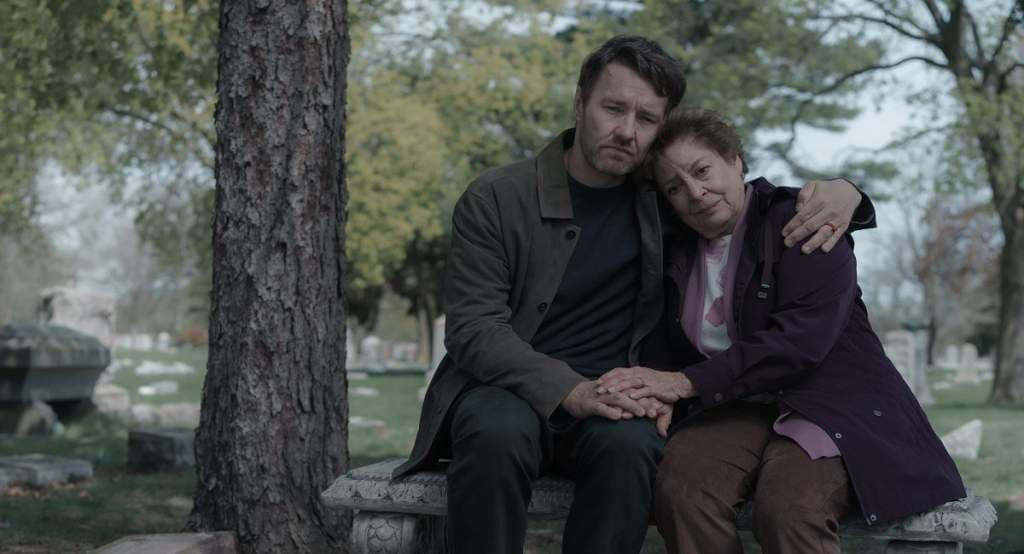
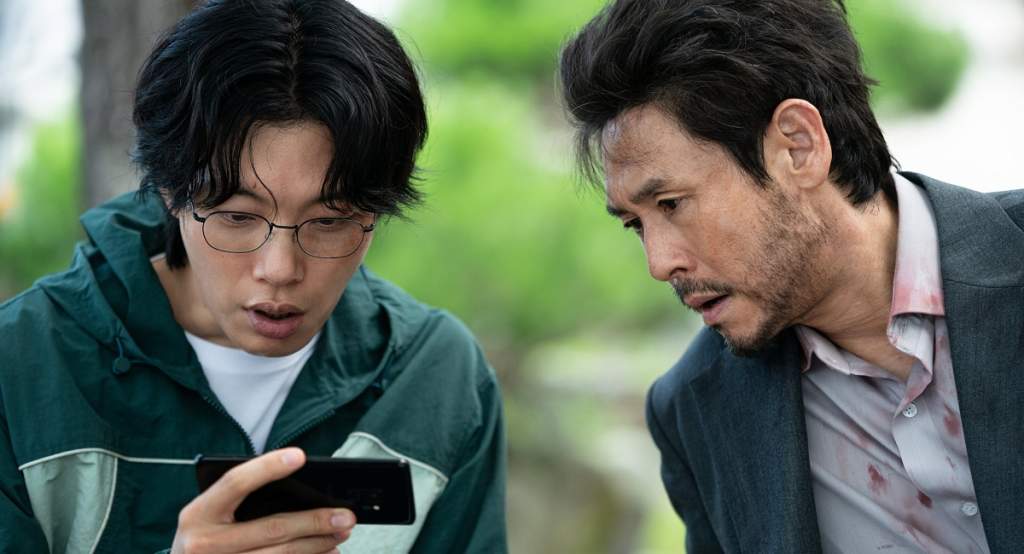
Netflix’s Mousetrap is one of the most intriguing Korean mystery thrillers of 2026. The series follows Moon-jae, a reclusive novelist whose entire identity is suddenly stolen by a mysterious man known as “The Rat.” With his name, face and life seemingly taken from him, Moon-jae turns to No-ja, a ruthless loan shark who has his own reasons for helping him. Together, they begin a dangerous search for the person responsible.
Directed by Kim Hong-sun and written by Lee Jae-gon, the Netflix original is based on the Kakao Entertainment webtoon Field Mouse by Ludvico. The main cast includes Ryu Jun-yeol as Moon-jae, Sul Kyung-gu as No-ja and Lee Kyoo-hyung as Detective Sun-yong.
But with its mysterious apartments, streets, businesses and crime scenes, many viewers are asking: Where was Netflix’s Mousetrap filmed?
You May Also Like


The best available evidence indicates that the series was filmed entirely in South Korea, with Seoul and the surrounding metropolitan area serving as the principal production environment. However, unlike some Korean dramas that publicly announce exact cafés, streets and landmarks, Mousetrap has not released an official scene-by-scene filming-location list. Therefore, some individual locations should be treated as reported or inferred rather than officially confirmed.
Mousetrap Release Date
Mousetrap premiered on Netflix on August 28, 2026.
Netflix officially describes the project as a Korean TV thriller and lists Ryu Jun-yeol and Sul Kyung-gu among the starring cast. The series is also classified under mysteries, crime TV shows and K-dramas based on webtoons.
The show consists of 10 episodes, with Netflix making the episodes available as part of the series’ launch.
The official Netflix announcement confirmed the August 28 premiere, while Netflix’s 2026 Korean slate identified Mousetrap as a scripted thriller based on the Kakao Entertainment webtoon Field Mouse.
Where Was Mousetrap Filmed?
The available production information points to South Korea, particularly Seoul and the greater Seoul metropolitan area.
Unlike productions that travel internationally, there is no reliable evidence that Mousetrap used a foreign country as a major filming location. A location report identifies production as taking place entirely in South Korea and suggests that much of the filming occurred in and around Seoul.
This makes sense for the story. Mousetrap is fundamentally an urban Korean thriller. Its plot involves identity theft, criminal networks, a private detective, a novelist living in isolation and a mysterious criminal figure moving through contemporary society.
The dense urban environment of Seoul provides the perfect setting for that kind of cat-and-mouse story.
Seoul, South Korea
The Primary Filming Environment
Seoul is the most important filming location associated with Mousetrap.
The South Korean capital provides the city streets, residential environments, commercial locations and urban atmosphere required by the story.
The series follows Moon-jae, a novelist who has deliberately withdrawn from society. His isolation is suddenly shattered when another person appears to have taken over his identity. He then becomes involved with No-ja, a loan shark who also operates a private detective agency.
Because so much of the story involves investigation and pursuit, the filmmakers needed an environment capable of moving quickly between quiet residential areas and crowded urban spaces.
Seoul offers both.
The city has modern skyscrapers, narrow residential streets, traditional neighborhoods, commercial districts, underground spaces and enormous transportation networks—all of which can be used to create the feeling that the characters are constantly being watched or followed.
Seoul’s Residential Neighborhoods
One of the most important visual elements of Mousetrap is its residential environment.
Moon-jae is introduced as a writer who has lived in isolation. Netflix’s synopsis emphasizes that his quiet life is suddenly destroyed when a mysterious figure steals his identity.
That means the production needed believable homes and private spaces rather than only famous Seoul landmarks.
Location reporting suggests that many scenes were filmed in real-life establishments and residential environments around Seoul, with the possibility that controlled studio facilities were also used for certain interiors.
The residential settings are particularly important because the series’ central mystery depends on identity. A familiar home suddenly becomes unfamiliar. A person’s own belongings can become evidence against them. A face that should prove someone’s identity becomes unreliable. That makes ordinary interiors surprisingly effective locations for the thriller.
Commercial Areas and Real Businesses
Mousetrap also appears to make use of the kind of commercial environments that are common throughout Seoul.
The story involves No-ja, a loan shark who also runs a private detective agency, meaning that the plot naturally moves between criminal contacts, investigations and everyday urban locations.
According to location research, the production appears to have taken over real establishments and businesses for certain interior scenes rather than relying entirely on purpose-built sets. This approach helps Korean thrillers feel grounded.
Instead of making every location look obviously cinematic, filmmakers can place the characters inside ordinary restaurants, offices, shops or other businesses. For Mousetrap, that realism strengthens the central question: What happens when an ordinary person’s identity can no longer be trusted?
Seoul Streets and Urban Exteriors
The streets of Seoul are another essential part of the show’s visual identity.
Mousetrap is structured as a chase thriller, with Moon-jae, No-ja and Detective Sun-yong moving through increasingly complicated circumstances while trying to uncover the identity of the mysterious Rat. Netflix describes the series as a pursuit involving three central figures whose paths become intertwined.
That naturally requires plenty of movement.
Urban streets provide opportunities for:
- Pursuit sequences
- Character encounters
- Surveillance scenes
- Vehicle sequences
- Investigative moments
- Nighttime atmosphere
- Establishing shots
Seoul’s combination of dense traffic and quieter side streets is especially useful for this type of storytelling. A character can disappear into a crowded area one moment and enter a deserted alley moments later.
Greater Seoul Metropolitan Area
Although Seoul is the clearest reported filming hub, it is important not to assume that every scene was filmed inside Seoul’s municipal boundaries.
South Korean productions frequently shoot throughout the greater Seoul metropolitan region, including neighboring cities and studio facilities, while presenting everything on screen as one continuous urban environment.
The available location reporting describes the production as taking place in and around Seoul rather than providing a verified list of individual districts or municipalities.
For that reason, viewers should be cautious about online articles claiming that particular famous Seoul landmarks appear in Mousetrap unless those claims are supported by production information.
At present, there is no reliable official evidence confirming major landmarks such as Gyeongbokgung Palace, N Seoul Tower or Lotte World Tower as specific filming locations. They may appear in establishing footage, but that should not be stated as fact without confirmation.
Studio and Controlled Interior Locations
Not every scene in Mousetrap needed to be filmed in an actual building.
The production likely combined location shooting with controlled interiors. Location reporting specifically notes the possibility that the production used sound stages at film studios in and around Seoul for certain scenes.
This would be particularly useful for scenes requiring complicated lighting, controlled sound or repeated action. Thrillers often require environments where the filmmakers can manipulate the atmosphere precisely. A small room can be made increasingly claustrophobic through lighting and camera movement.
A hallway can be redesigned to make a character appear trapped. An office can be transformed into a crime scene. For Mousetrap, these controlled spaces would complement the real Seoul locations.
Why Was Seoul Chosen for Mousetrap?
Seoul is almost perfectly suited to the story.
The series is not a traditional action thriller about superheroes or spies. Director Kim Hong-sun described it as a story about an ordinary person whose entire life has been taken away and who desperately tries to reclaim his identity.
That idea works particularly well in a huge city. Seoul is home to millions of people, which makes the concept of someone disappearing into society believable. At the same time, the city contains countless private spaces where a person can hide. The contrast between a huge population and an intensely personal mystery gives Mousetrap much of its potential tension.
When Was Mousetrap Filmed?
Production took place during 2025.
The most consistent available production information places filming from approximately April 2025 through November 2025. IMDb lists filming dates from April to November 2025, while Korean production information also gives April–November 2025 as the shooting period.
The long production period is understandable for a 10-episode thriller involving multiple locations, action sequences and complex mystery elements.
The series’ actors also discussed filming action scenes during the promotional campaign. Ryu Jun-yeol revealed that he even asked director Kim Hong-sun to make the action feel physically convincing rather than overly polished.
What Happened After Filming?
After principal photography ended in November 2025, Mousetrap entered post-production.
The filmmakers had to assemble footage from different locations into a single coherent urban world. This is particularly important because the series uses the idea of identity as its central mystery. The audience needs to understand where characters are, who they are following and how the different pieces of the investigation connect.
Post-production also included editing the chase sequences and creating the thriller’s tense atmosphere. The project was subsequently prepared for Netflix’s 2026 Korean lineup. Netflix officially confirmed the August 28 premiere in July 2026.
The Real-Life Inspiration Behind the Setting
Mousetrap is based on the Kakao Entertainment webtoon Field Mouse, but the television adaptation also draws on a Korean folktale involving a mouse that eats someone’s clipped fingernails and transforms into that person.
The supernatural folklore is transformed into a modern identity thriller. Instead of simply presenting a traditional horror story, the series asks a contemporary question:
If someone looks exactly like you and possesses your identity, how can you prove that you are the real person?
Seoul’s modern urban environment makes that question even more unsettling.
Netflix’s Mousetrap was filmed primarily in South Korea, with Seoul and the surrounding metropolitan area serving as the main production environment. Available location research indicates that production took place entirely in South Korea, while individual official filming-location announcements have been limited.
The series was filmed between April and November 2025, according to available production information. Rather than relying on a handful of famous landmarks, Mousetrap appears to use the everyday side of Seoul—residential spaces, businesses, streets and controlled interiors—to create its world. That approach fits the story perfectly. Moon-ja is not fighting an obvious monster or supernatural villain. He is fighting the terrifying possibility that someone else can become him.
The city therefore becomes part of the mystery. Crowded streets provide places to hide, ordinary buildings become potential crime scenes, and familiar homes become spaces where identity can no longer be trusted. Following its 2025 production period, the completed 10-episode thriller premiered globally on Netflix on August 28, 2026, starring Ryu Jun-yeol, Sul Kyung-gu and Lee Kyoo-hyung.
For viewers interested in visiting the real-world backdrop of the series, Seoul is the best place to start, although fans should keep in mind that Netflix has not published a comprehensive list of exact streets, buildings or businesses used during production.
Related – Where Was ‘Eyes on You’ Series Filmed? All Shooting Locations