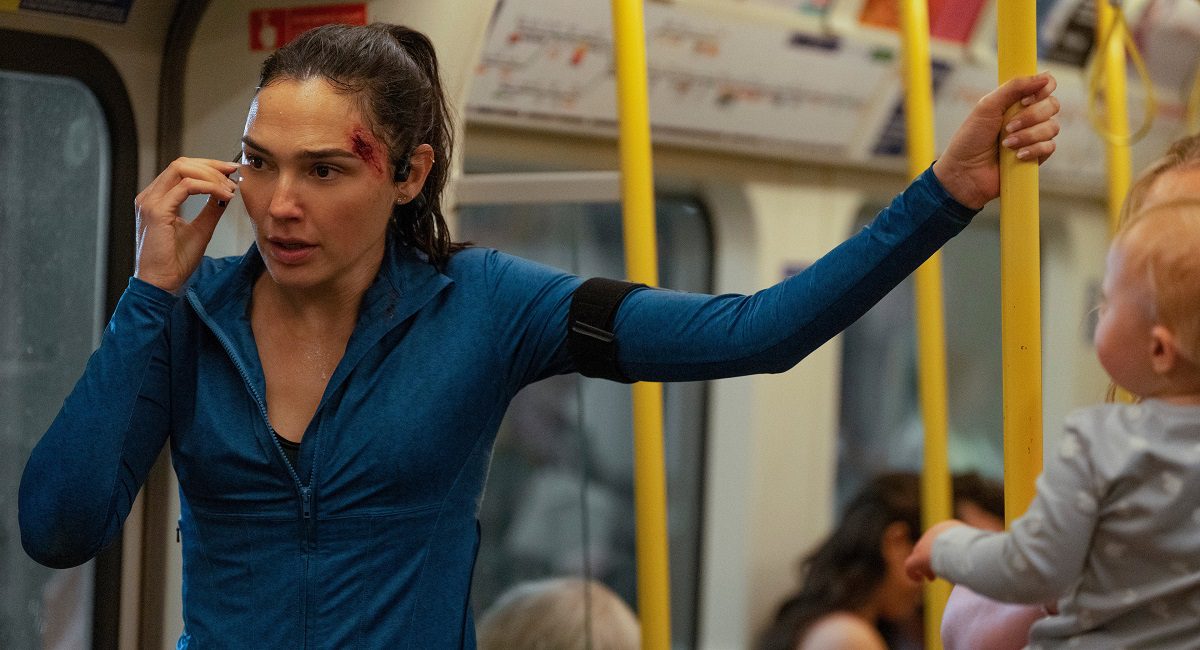
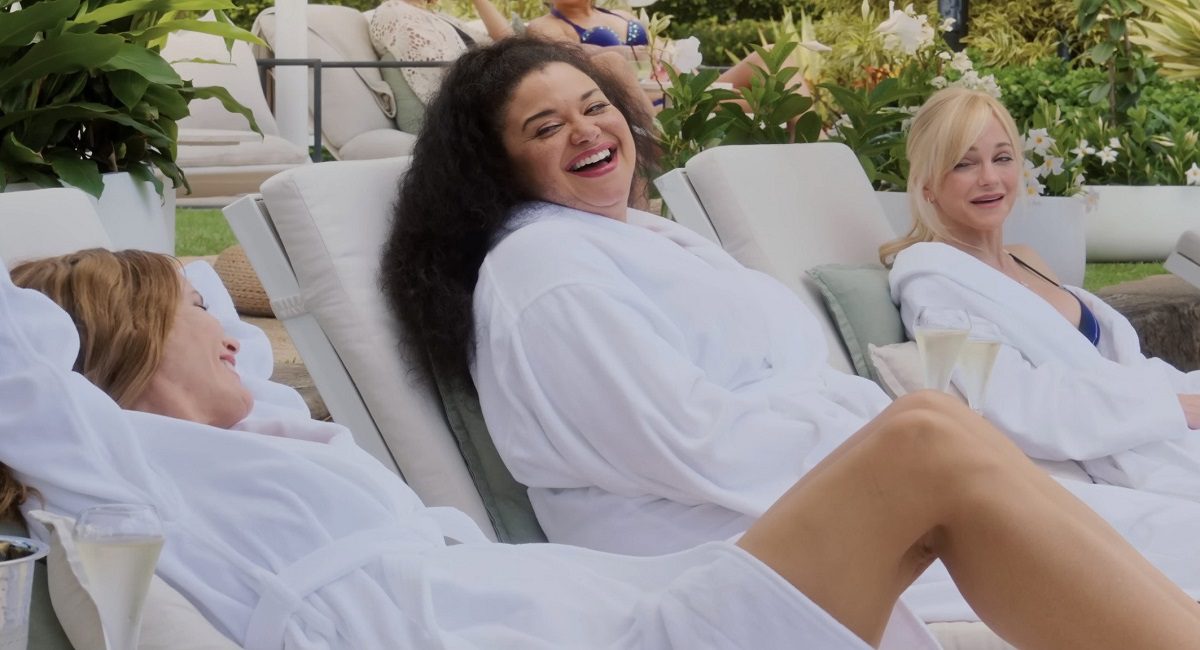
Directed and written by Jon Lucas and Scott Moore, Spa Weekend stars Leslie Mann as Jane, Anna Faris as Sophie, Michelle Buteau as Coco, and Isla Fisher as Mel. The movie follows four lifelong friends who desperately need a break from careers, relationships, family responsibilities, and the exhausting routines of adult life.
They choose a luxury spa retreat as the perfect place to reconnect, but instead of finding peace, their weekend turns into a series of embarrassing disasters, bad decisions, emotional confrontations, and unexpected revelations. The film was released in theaters in August 2026 and has been marketed as a comedy about friendship, self-care, and what happens when four women who have known each other for decades finally stop pretending that everything is fine.
The Four Friends and Why They Need a Spa Weekend
At the center of Spa Weekend are Jane, Sophie, Coco, and Mel, four women whose friendship goes back to childhood but whose adult lives have gradually pulled them in very different directions. Jane, played by Leslie Mann, is the highly organized career woman who has built her life around responsibility and achievement. She is successful, capable, and constantly busy, but that control has also left very little room for spontaneity or romance.
You May Also Like

Your Fault: London (2026) Ending Explained: Why Was Nick Arrested?

Where Was The Mongoose (2026) Actually Filmed? The Real Locations Revealed
I Want Your Sex (2026) Ending Explained: Who Killed Erika? Full Story & Ending Breakdown

Legend of the White Dragon (2026) Ending Explained: Does Erik Reed Survive the Final Battle?
Sophie, played by Anna Faris, is more nervous and accommodating, a woman who has become accustomed to putting other people’s needs before her own. Coco, played by Michelle Buteau, is outspoken and emotionally intense, particularly because of the anger and disappointment surrounding her divorce and relationship with her estranged husband Roger. Then there is Mel, played by Isla Fisher, the unpredictable member of the group whose brutally direct personality and impulsive behavior make her both entertaining and exhausting.

The important thing about Mel is that she is not simply the “fun friend.” The movie gradually reveals that her chaotic behavior is connected to a deeper fear that she is no longer truly wanted by the other women. The women initially imagine their trip as an opportunity to forget everything waiting for them at home. The luxury retreat promises massages, meditation, yoga, healthy food, relaxation, and all the other things associated with expensive wellness vacations.
But the irony of Spa Weekend is that these women are so used to managing their lives that they do not actually know how to relax. Their personalities follow them into the retreat, and Mel makes the situation even more chaotic. The movie’s basic premise is therefore not really about a spa; it is about four friends discovering that the problems they hoped to escape are actually problems within themselves and within their friendship. The filmmakers use the spa as a pressure cooker where years of unspoken frustration can finally come to the surface.
What Really Happens When Mel Joins the Trip?
The central conflict of Spa Weekend becomes clear when Mel arrives. Jane, Coco, and Sophie have reached a point where they are increasingly uncomfortable with Mel’s behavior, and there is an uncomfortable truth beneath the entire vacation: the group would probably have preferred the weekend without her. Mel’s presence is not simply an inconvenience; it exposes how much the friendship has changed since they were younger. Sophie, however, secretly invites Mel because completely abandoning a lifelong friend feels wrong to her.
Once Mel arrives at the luxury retreat, the carefully planned wellness weekend almost immediately begins to unravel. Instead of quietly following the rules of the resort, Mel approaches the trip with the same impulsive energy she has brought into the friendship for years. The women get caught up in increasingly ridiculous situations, including the movie’s much-publicized goat yoga sequence and runaway golf-cart chaos.
What should have been a peaceful wellness experience becomes the exact opposite. The comedy works because the resort represents everything these women think they need: expensive treatments, structured relaxation, beautiful surroundings, and an opportunity to temporarily become different versions of themselves. Yet they cannot even make it through a wellness activity without creating a disaster. Mel’s behavior becomes especially important because she refuses to participate in the unspoken agreement between the other three women: pretend that everything is okay.
She says things that the others would rather leave unsaid, pushes situations too far, and forces the group to confront uncomfortable realities. At first, this makes her look like the villain of the weekend, but the story eventually turns that idea around. Mel is not the only person responsible for the friendship’s problems. Jane, Coco, and Sophie have also been avoiding difficult conversations, quietly building resentment, and allowing their old friendship to survive mostly because of history. The spa simply gives all of those unresolved feelings a place to explode.
Jane, Coco, Sophie and Mel Finally Face Their Real Problems
As the weekend becomes more chaotic, each woman begins confronting the personal problem she carried into the retreat. Jane’s story revolves around control. She is extremely good at managing professional and everyday responsibilities, but that same discipline has made her reluctant to take emotional risks.
Her connection with Kai, the attractive yoga instructor played by Adam Demos, gives the movie a romantic subplot, but the relationship is ultimately more important as a symbol of Jane allowing herself to want something rather than simply fulfilling obligations. Coco’s storyline is more connected to anger and her failed marriage. Her relationship with Roger forces her to consider whether the anger she has been carrying is helping her move forward or keeping her trapped in the past.

The movie does not treat divorce as something that can magically be repaired during one vacation. Instead, Coco has to begin recognizing her own emotional responsibility. Sophie, meanwhile, represents the person who has spent too much of her life saying yes. Her problem is not that she is incapable of standing up for herself; it is that she has become so accustomed to being useful to everyone else that she has forgotten what she wants. Her experience at the spa pushes her toward setting boundaries and recognizing that being agreeable all the time is not the same thing as being happy.
Mel’s problem is the most directly connected to the friendship itself. She appears fearless, but her behavior increasingly suggests insecurity. Her constant disruption can be interpreted as an exaggerated attempt to make sure she still has a place in the group. She does not want to become the old friend everyone remembers fondly but no longer wants around.
That makes the earlier decision to exclude her particularly painful. What looks like a simple disagreement about one annoying friend is actually about something much bigger: the fear of growing apart from people who once knew you better than anyone else. This is why the movie eventually shifts away from pure slapstick and toward an emotional confrontation.
Why the Spa Weekend Falls Apart
The biggest irony in Spa Weekend is that the women pay for luxury specifically because they want to escape stress, yet their own behavior turns the retreat into a disaster. The more they attempt to control the weekend, the more uncontrollable it becomes. The resort’s peaceful atmosphere clashes with the unresolved tension between the friends, and Mel’s reckless energy repeatedly turns minor problems into major incidents.
The goat-yoga sequence and golf-cart chaos are examples of how the movie uses physical comedy to represent the larger emotional problem. These women are literally unable to stay on the path they planned for themselves. Eventually, the accumulated problems become too much for the resort, and the women are forced out after their behavior becomes impossible to ignore.
This is the point where the title’s central joke becomes clear: the spa has failed completely as a vacation destination, but it has succeeded as a place where the friends finally confront one another. Jane, Coco, and Sophie can no longer hide their frustration with Mel. They admit that they are tired of dealing with the consequences of her behavior, and the issue of Mel being excluded from the original plans becomes impossible to avoid. The confrontation is important because nobody gets to remain completely innocent.
Mel has caused genuine problems, but the other women have also been dishonest by pretending everything was fine while privately deciding that she was too difficult to include. The film therefore refuses to make the ending about simply teaching Mel to behave better. Instead, it argues that the entire friendship has become unhealthy because everyone has been avoiding honesty. According to the ending breakdowns, the women acknowledge the resentment created by careers, families, divorce, and unequal life circumstances rather than pretending that decades of history automatically make everything easy.
Spa Weekend Ending Explained: What Really Happened at the Spa?
So, what really happened at the spa in Spa Weekend? The simplest answer is that the spa did not actually solve the women’s problems because the spa was never the real solution. The luxury retreat was simply the setting that exposed the problems they had been carrying for years. After the disastrous events and confrontation, the four friends ultimately choose not to end their friendship. Mel does not suddenly become a completely different person, and Jane, Coco, and Sophie do not suddenly become perfectly patient friends.
Instead, they make a more realistic decision: they accept that their friendship is complicated and choose to continue it anyway. This is why the ending is deliberately less dramatic than viewers might expect. There is no giant twist in which Mel was secretly responsible for everything, no magical transformation, and no indication that the four women have permanently solved their personal problems. The real resolution is emotional rather than plot-driven. Jane becomes more open to taking risks and making room for her own happiness.

Her relationship with Kai represents the possibility that she can have a life outside constant responsibility. Sophie begins to understand that setting boundaries does not make her selfish. Coco starts dealing more honestly with the anger left behind by her divorce. And Mel remains Mel—chaotic, blunt, unpredictable, and occasionally exhausting—but she is no longer treated as a problem that needs to be secretly removed from the group. The most important change is therefore not that the four women become different people; it is that they finally become more honest with one another.
They understand that adult friendship requires more than remembering how close they were as children. It requires effort, forgiveness, boundaries, and the willingness to say difficult things before resentment becomes permanent. That is the real meaning of the spa weekend. They went looking for self-care in an expensive resort and instead discovered that caring for themselves also meant caring enough about their friendship to tell the truth.
What Does the Final Scene Mean?
The final part of Spa Weekend works because the women realize that the expensive setting was never what they truly needed. Their trip was built around the idea that relaxation could be purchased: book the luxury resort, receive massages, practice yoga, eat healthy food, and everything will somehow feel better. But their emotional problems cannot be fixed by a treatment package. What they really needed was time together without the pressure of careers, relationships, children, responsibilities, and social expectations.
The ending therefore reframes the entire movie. The disasters are not meaningless comedy; they force the friends to stop performing versions of themselves and acknowledge what they have become. The final friendship decision matters because they do not erase the conflict. They simply decide that the friendship is worth the work. The ending is also why Mel’s character is more important than she initially appears. For most of the film, she seems like the person ruining the vacation.
But once the confrontation happens, it becomes clear that she has also been reacting to a fear of abandonment. Her aggressive honesty and chaotic behavior are not necessarily healthy, but they are her way of demanding reassurance that she still belongs. Jane, Coco, and Sophie have been doing the opposite: instead of confronting the problem, they have been quietly creating distance.
Neither approach is perfect. The ending asks them to find a middle ground where honesty does not have to become cruelty and friendship does not have to mean tolerating everything. This is also why the film’s conclusion is ultimately happy without being completely unrealistic. The women do not go home with their lives magically fixed. Their marriages, careers, emotional baggage, and personal problems still exist. What changes is their willingness to face those problems instead of pretending that a perfect weekend can make them disappear.
Spa Weekend Ending Meaning: The Real Message About Friendship and Self-Care
The deeper meaning of the Spa Weekend ending is that self-care is not always about escaping your life; sometimes it is about finally dealing with the things making your life unhappy. Jane, Sophie, Coco, and Mel arrive at the retreat believing they need luxury, relaxation, and distance from their normal responsibilities. Instead, the weekend forces them to examine their relationships with themselves and each other. That idea gives the comedy its emotional foundation.
The movie’s four women represent different forms of modern adult exhaustion: Jane is overwhelmed by responsibility and control, Sophie by people-pleasing, Coco by unresolved anger, and Mel by insecurity hidden behind reckless confidence. None of them is completely wrong, and none of them is completely right. Their friendship survives because they finally recognize that difference. The ending also suggests that long friendships cannot survive purely on nostalgia. Knowing someone since childhood does not automatically make an adult friendship healthy. People change, circumstances change, and old dynamics can become difficult.
The reason these four women remain friends is not simply because they have shared history; it is because they ultimately choose to keep showing up for one another despite everything that has changed. That makes the title Spa Weekend somewhat ironic. The women spend the movie searching for the perfect place to relax, but the real restorative experience comes from reconnecting honestly with people who know them completely. The spa itself becomes almost irrelevant by the end.
The luxury, treatments, yoga, and beautiful surroundings were just distractions from the emotional work the women actually needed to do. In that sense, the ending is not really saying that expensive self-care is useless. It is saying that no amount of luxury can replace genuine connection. The four friends do not leave the weekend perfect, but they leave more honest, more aware of one another, and more willing to accept that friendship can be messy without being worthless.
That is ultimately what really happened at the spa in Spa Weekend (2026): the women went there expecting to repair themselves, but instead they repaired the friendship that had quietly been falling apart. And that is why the ending chooses reconciliation over a dramatic breakup. Mel does not ruin the friendship forever, the group stays together, and each woman walks away with a small but meaningful change in perspective.
Spa Weekend (2026) ends on a positive note, but its happy ending is not about four women becoming perfect versions of themselves. Jane, Sophie, Coco, and Mel remain flawed, complicated adults. What changes is their willingness to acknowledge those flaws and continue their friendship anyway. The spa weekend fails as a relaxing vacation, but succeeds as the wake-up call they needed.
Related – Legend of the White Dragon (2026) Ending Explained: Does Erik Reed Survive the Final Battle?