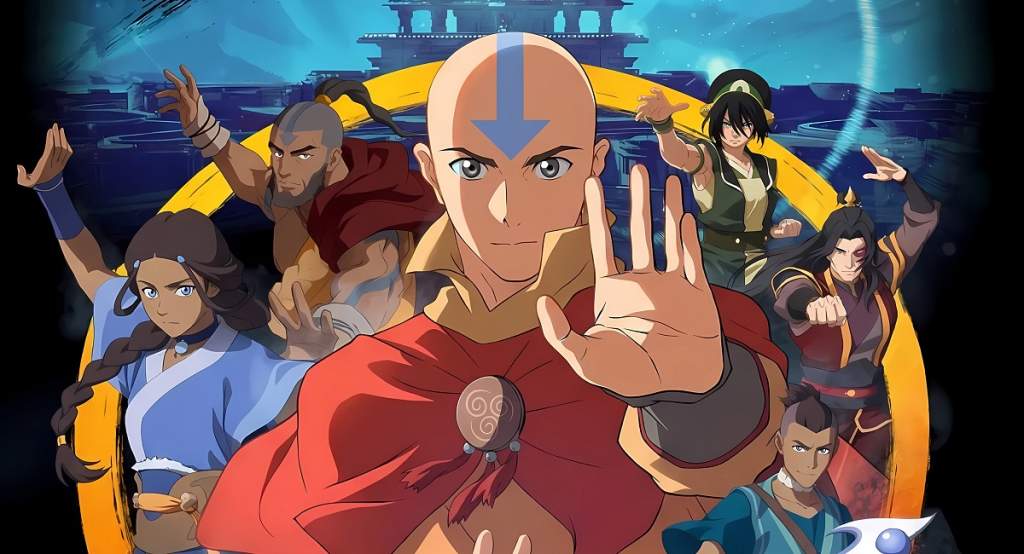
Avatar Aang: The Last Airbender brings Aang and the original Team Avatar back for a new adventure, but this time the characters are no longer the young heroes we remember from the original animated series. The story takes place years after the Hundred Year War, with Aang now an adult and still carrying the emotional weight of being the last surviving Air Nomad. The movie introduces a mysterious surviving Airbender named Tagah, who gives Aang something he has desperately wanted since the destruction of his people: hope that the Air Nomad legacy might actually be restored.
The film premiered globally on July 25, 2026, on Paramount+, with a limited theatrical release around the same period. It runs for roughly 1 hour and 39 minutes and is directed by Lauren Montgomery, with Tim Hedrick and Christopher Yost credited for the screenplay. Eric Nam voices Aang, while Jessica Matten voices Katara, Román Zaragoza voices Sokka, Dionne Quan voices Toph, Steven Yeun voices Zuko, and Dave Bautista voices Tagah. Paramount’s official synopsis describes the story as Aang’s quest to discover an ancient power that could save his culture from extinction before it falls into the wrong hands.
But the biggest question surrounding the movie is not simply whether Aang defeats the villains. It is much more personal: Does Aang actually save the Airbender legacy? The answer is complicated. Aang does not restore the Air Nomads in the way he initially hopes, but by the end, he discovers that preserving a culture is about much more than bringing back its supernatural abilities.
You May Also Like


Aang Discovers Another Airbender and Finally Sees Hope for the Air Nomads
The movie begins by showing how much Aang has changed since the events of the original series. He is older, more experienced and considerably more comfortable with his responsibilities as the Avatar, but one wound has never completely disappeared. Aang is still haunted by the destruction of the Air Nomads and the fact that he survived when almost everyone else from his culture was killed. Even though he helped end the Hundred Year War, there is still a part of him that believes saving the world was not enough because he could not save his own people.
That emotional conflict becomes the foundation of the entire movie.
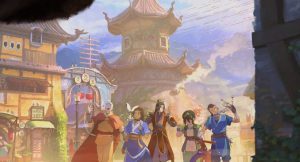
Aang’s life changes when he encounters Tagah, a mysterious Airbender who has survived for thousands of years after being frozen. At first, Tagah appears to be exactly what Aang has been searching for without even realizing it. He is living proof that Aang is not truly the last Airbender. More importantly, Tagah tells Aang about an ancient artifact connected to Avatar Sonam, a forgotten Avatar whose staff possesses extraordinary spiritual power.
According to Tagah, the staff could potentially restore Airbending and give Aang a way to rebuild what was lost. For Aang, this is almost impossible to resist. The possibility of seeing Air Nomads return is not simply another adventure. It is a chance to repair the deepest wound of his life.
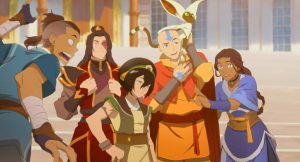
Aang therefore reunites with his closest friends. Katara, Sokka, Toph and Zuko join him on the journey, creating the emotional core that makes the movie feel like a genuine continuation of the original series. The characters are older, but their personalities remain recognizable. Sokka still provides much of the humor, Toph remains fiercely independent, Katara is often the voice of emotional reason, and Zuko brings the perspective of someone who understands what it means to inherit a complicated cultural legacy.
However, another group is also searching for Sonam’s staff.
They are known as The Denied, a group of non-benders who believe the world’s system is fundamentally unfair because bending gives certain people advantages that ordinary people will never possess. Their anger is understandable, but their methods become increasingly dangerous. The Denied don’t simply want social change. They want power, and Sonam’s staff appears to offer them a way to obtain it.
This creates an important conflict running underneath the adventure. Aang wants the staff because he wants to restore his people. The Denied want it because they want to change the balance between benders and non-benders. And Tagah wants it for reasons that are far more dangerous than either of them initially understands.
The journey therefore becomes more than a race to find an ancient artifact. It becomes a test of whether power can actually repair the damage caused by history.
Tagah’s Secret Is Revealed: He Was Never the Hero Aang Thought He Was
For much of the movie, Tagah seems like an unexpected gift from the past. Aang sees himself in him. Both are Airbenders. Both understand what it means to lose their people. Both have experienced isolation. Most importantly, both carry the burden of being connected to a culture that has nearly disappeared.
That similarity is precisely what makes Tagah so dangerous.
As Aang becomes more emotionally attached to Tagah, Katara begins to notice that something is wrong. She doesn’t trust him completely, and eventually the film reveals why. Tagah has been manipulating Aang from the beginning because only the Avatar can access the path to Sonam’s ancient staff.
The deeper revelation is that Tagah’s history is tied directly to the artifact.
Long before Aang’s time, Avatar Sonam experimented with spiritual power in an attempt to help people gain access to Airbending. The staff became an enormously powerful object capable of transferring spiritual energy and giving ordinary people abilities they did not naturally possess. What initially appeared to be an act of compassion ultimately created a dangerous imbalance.
Tagah was connected to that ancient history and eventually became consumed by the power associated with Sonam’s staff. His desire was no longer simply to preserve Airbending. He wanted to reshape society through it.
This is where the movie cleverly mirrors Aang’s own emotional journey.
Aang wants to restore the Air Nomads because he misses his culture. Tagah wants to use Airbending to reshape the world because he believes power is the solution to suffering. Both characters begin with understandable motivations, but Tagah takes his desire to an extreme.
Tagah eventually joins forces with The Denied and reveals the true potential of the staff. Instead of merely preserving Air Nomad culture, the artifact can be used to give Airbending to non-benders.
For The Denied, this seems like the answer they have been waiting for.
If bending is the source of inequality, then giving everyone bending abilities should theoretically eliminate the imbalance.
But the staff is not a harmless solution.
The power begins changing the people who receive it, and Tagah himself becomes increasingly consumed by its energy. What started as a mission to create equality turns into a campaign for domination. Tagah is no longer trying to heal an ancient wound. He is trying to control the world through the same power he once believed would save it.
This is also why Aang’s relationship with Tagah is so important. Tagah represents what Aang could become if he allows his grief to control his decisions.
The Final Battle: Tagah Turns the Denied Into Airbenders
The movie’s final act moves the conflict toward Republic City, where Tagah’s plan finally comes together. By this point, the heroes understand that the staff cannot simply be allowed to fall into the wrong hands.
But stopping Tagah is easier said than done.
Tagah uses the staff’s power to transform members of The Denied into Airbenders. Suddenly, the group that previously had no bending abilities becomes a dangerous force capable of fighting Team Avatar on an entirely different level.
The sequence is one of the film’s biggest action set pieces. Katara, Toph and Zuko are forced to fight enemies who now possess the element traditionally associated with Aang’s people. Sokka, despite being the only member of the core group without bending, once again proves that he doesn’t need supernatural abilities to contribute.
Meanwhile, Aang confronts Tagah.
The battle becomes increasingly destructive, and Tagah’s connection with the staff pushes him into a monstrous state. His body and spirit appear to be overwhelmed by the ancient energy. Rather than simply fighting like another powerful bender, Tagah becomes almost an embodiment of uncontrolled spiritual power.
Aang initially tries to overpower him.
But that approach doesn’t work.
Eventually, Aang enters the Avatar State and manages to take control of the staff. For a brief moment, the entire story seems to be heading toward the ending Aang wanted from the beginning.
He has the artifact.
He has the power.
He could potentially restore Airbending.
He could potentially bring back the legacy of his people.
And that is exactly why this moment becomes the most important decision in the entire movie.
Aang realizes that the staff isn’t simply a magical solution to the Air Nomads’ extinction. Its power has already corrupted Tagah, manipulated The Denied and created a cycle of people seeking power to repair the damage caused by power in the first place.
If Aang uses it to resurrect the Air Nomads or permanently restore Airbending, he may be repeating the same mistake.
Instead of asking, “Can I bring my people back?”, Aang finally asks the more important question:
“What does it actually mean to preserve my people?”
That realization changes everything.
Why Does Aang Destroy Sonam’s Staff?
This is the emotional heart of the ending.
Aang ultimately chooses to destroy Avatar Sonam’s staff rather than use it to restore the Air Nomad way of life through artificial power. The decision is incredibly painful because the staff represents everything he has wanted since the beginning of his journey.
Aang could have chosen the selfish option.
He could have used the staff to bring back the culture he lost.
Instead, he accepts that some things cannot simply be recreated.
The film makes an important distinction between a culture and a power.
Airbending is part of the Air Nomad identity, but it isn’t the entirety of that identity. The Air Nomads were defined by their philosophy, spirituality, compassion, peaceful traditions and way of life. If Aang rebuilt a society where people possessed Airbending but abandoned those principles, he would technically restore the power while losing the culture.
That is why destroying the staff becomes Aang’s real victory.
He chooses the legacy over the shortcut.
When the staff is destroyed, the power granted to The Denied disappears. Those who had been transformed into Airbenders lose their abilities. The threat that Tagah created collapses, and the enormous spiritual energy sustaining him is also removed.
Tagah begins to disappear.
His connection to the staff had become so complete that once the artifact is destroyed, he can no longer maintain himself in the same way. His physical form gradually dissolves, bringing his centuries-long story to an end.
But the movie does not treat Tagah’s defeat as a simple villain death.
Aang speaks to him about letting go, forgiveness and the burden of carrying hatred for too long. Tagah’s final moments therefore mirror Aang’s own journey. Both characters are defined by loss, but they respond to that loss differently.
Tagah allowed his grief to become obsession.
Aang finally chooses to let his grief become remembrance.
That distinction is what saves Aang from following Tagah’s path.
Does Aang Save the Airbender Legacy?
So, does Aang actually save the Airbender legacy?
Yes—but not by bringing the Air Nomads back.
This is the most important twist in the ending.
Aang begins the movie believing that the Air Nomad legacy can only survive if Airbending itself is restored. The existence of Tagah makes that belief even stronger. If another Airbender exists, perhaps the extinction of the Air Nomads was never truly permanent.
But by the end, Aang understands that trying to recreate the past exactly as it was would actually prevent the culture from evolving.
After the final battle, the surviving members of Team Avatar help rebuild what was damaged. Instead of creating an army of new Airbenders, Aang begins preserving the teachings, traditions and artifacts of the Air Nomads.
This leads to the creation and development of Air Acolytes—ordinary people who are willing to study and preserve Air Nomad philosophy even though they do not necessarily possess Airbending.
One of the important figures connected to this new direction is Kallik, a member of The Denied who changes sides and ultimately helps Aang. Unlike the other members of the group, Kallik recognizes that Aang is genuinely trying to protect people rather than dominate them. She eventually becomes connected to the Air Acolytes and joins the effort to preserve Air Nomad heritage.
The ending therefore changes the meaning of the phrase “last Airbender.”
Aang may remain the last person who carries the traditional Air Nomad bending lineage at this point in the story, but he is no longer the last person carrying the culture.
That is a major difference.
The Air Nomads don’t return as a magically resurrected nation. Instead, their ideas spread to a new generation of people from different backgrounds.
And that may actually be a more meaningful form of survival.
The movie’s final moments reinforce this idea by showing Aang and the new Air Acolytes continuing to search for lost Air Nomad artifacts and history. The journey is no longer about finding a magical object that can fix everything. It is about remembering what was lost and making sure those lessons are never forgotten.
The discovery of a surviving population of Sky Bison provides another emotional touch. For years, creatures associated with the Air Nomads seemed to be part of a vanished world. Seeing them again gives Aang another reason to believe that extinction doesn’t always mean the complete disappearance of a legacy.
The final message is therefore surprisingly hopeful.
Aang cannot change history.
He cannot bring back the people he lost.
He cannot undo the Fire Nation’s genocide.
And he cannot use one magical artifact to restore everything to the way it was before the war.
But he can choose what happens next.
That is what makes the ending work.
What the Ending Means for Aang, The Denied and the Future of Avatar
The ending also leaves several important questions about the future of the Avatar universe.
The biggest is The Denied.
Their defeat does not magically solve the social inequality that created them. They emerged from a genuine frustration: non-benders live in a world where people with bending abilities can possess extraordinary advantages. Giving the Denied temporary Airbending doesn’t solve that underlying issue, and taking it away doesn’t make their grievances disappear either.
This is particularly interesting because The Denied can be viewed as an early ideological precursor to conflicts that later appear in the wider Avatar timeline. Their frustration with the relationship between benders and non-benders echoes themes that become central to The Legend of Korra.
That makes the movie’s ending more complicated than a simple “heroes win, villains lose” conclusion.
Aang stops Tagah and prevents the staff from permanently changing the balance of the world, but he hasn’t solved every social problem. In fact, the movie intentionally leaves some of those tensions unresolved.
That makes sense for Aang’s character. He is the Avatar, but he is not a magician who can instantly repair centuries of political and cultural conflict.
His responsibility is to maintain balance, not force everyone into the same system. The destruction of Sonam’s staff also establishes an important boundary for Aang. He finally understands that having the ability to change the world does not automatically mean he should use it.
That lesson is extremely important for an Avatar. Throughout his life, Aang has been told that he has enormous power. But his greatest strength has always been his ability to refuse unnecessary violence and search for another solution. In the final battle, he applies that same philosophy to his own personal desires.
Destroying the staff is essentially Aang choosing restraint over power. And that is why the ending is bittersweet.
Aang wins the battle, saves Republic City and stops Tagah, but he loses the one object that might have restored the Air Nomads in the traditional sense. He has to accept that he will never get the simple happy ending he imagined.
Instead, he creates something new. The Air Nomad legacy becomes a philosophy rather than merely a bloodline.
It becomes something that people can learn, practice and pass forward. And in that sense, Aang does save the Airbender legacy. He simply saves it in a completely different form than he expected.
The movie’s final idea is that cultures do not survive because every original person survives. They survive because their stories, values, traditions and beliefs continue to influence people long after the original generation is gone.
Aang begins the film desperate to restore the past. He ends it committed to protecting the future. That is the real ending of Avatar Aang: The Last Airbender.
The ancient staff is destroyed. Tagah’s threat is over. The Denied lose the artificial Airbending power they received. Republic City survives, and Aang begins rebuilding the Air Nomad legacy through the Air Acolytes and the preservation of his people’s history.
Most importantly, Aang finally stops measuring his success by what he can bring back. Instead, he measures it by what he can pass forward. And that makes the movie’s final message much deeper than simply asking whether the Air Nomads will return.
They may never return exactly as they were—but their spirit doesn’t have to disappear. For Aang, that is enough.
Related – Yellow Mirror Ending Explained: The Shocking Truth Behind the Final Scene