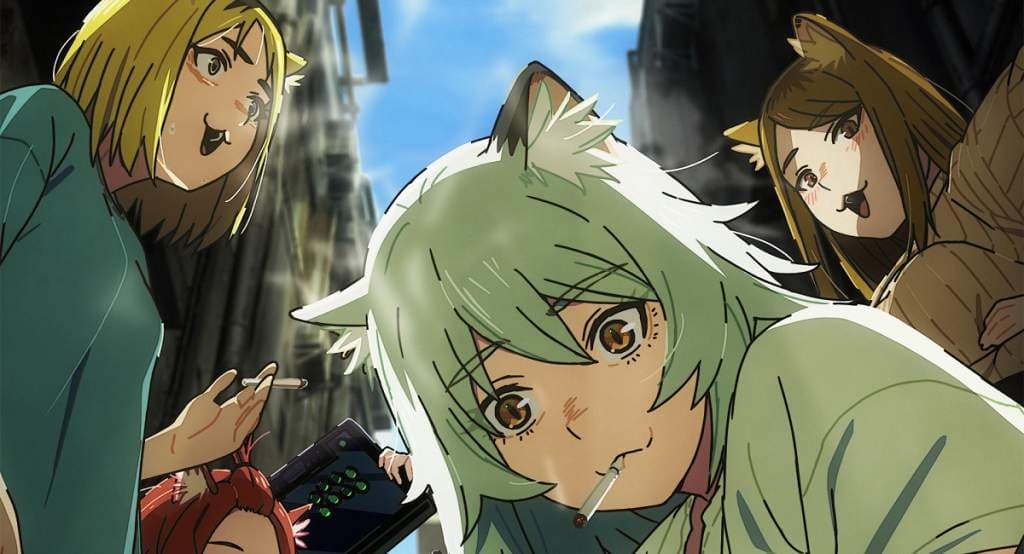
In the crowded Summer 2026 anime season packed with high-profile returns like Mushoku Tensei: Jobless Reincarnation Season 3 and ambitious reboots such as Science Saru’s Ghost in the Shell, few expected a crude, nicotine-soaked comedy about a chain-smoking catgirl to seize the conversation. Yet Chainsmoker Cat (Japanese: Yani Neko) has done exactly that.
By mid-August 2026, data from Japan’s Anime Data Insight Lab showed the series achieving a staggering 250% trending retention rate on Google searches by its fourth week, peaking near three times its debut-week levels and holding strong. It claimed the top spot on Niconico’s streaming rankings for the first half of the season, outperforming bigger titles in views, comments, and engagement. Manga volumes sold out and went into reprints. Online discourse exploded. What began as a niche viral manga has become the season’s clearest dark horse—an unapologetically filthy, polarizing hit that refuses to be ignored.
From Manga Roots to Anime Explosion
The story originates with NyanNyanFactory, the creator behind the manga serialized in Kodansha’s Weekly Young Magazine since February 20, 2023. What started as a guest appearance quickly became a regular series, collecting into tankōbon volumes (13 by August 2026). Seven Seas Entertainment licensed it for English release, with Volume 1 arriving in December 2025 and subsequent volumes following through 2026 and beyond. The premise is deceptively simple and deliberately off-putting: in a modern Japan where “beastfolk” (anthropomorphic cat-people and similar) coexist with humans, Yaniko Satō—better known as Yani or Yanineko—lives as a freeter whose life revolves around cigarettes.
You May Also Like
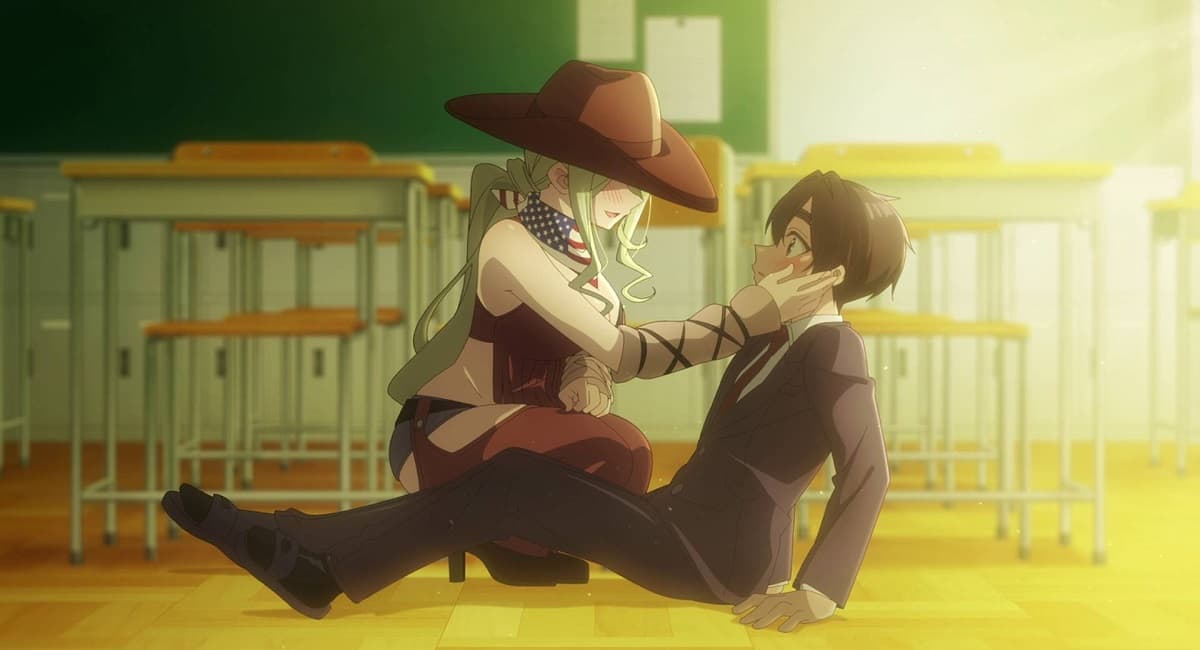

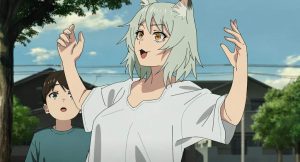
Her apartment is a toxic disaster zone: walls coated in tar, floors littered with butts, the air thick with the permanent stench of smoke. Money that should go to rent or food instead funds her habit. When funds run dry she scavenges butts from the street or reuses spent ones. Attempts to quit collapse almost instantly under withdrawal. Neighborhood kids call her “chimney.” Her responsible younger sister Imoko repeatedly tries to intervene, often arriving in hazmat gear. Surrounding Yani is a cast of equally dysfunctional neighbors in the same rundown apartment building run by a long-suffering human landlord.
The anime adaptation, produced by Bibury Animation Studios and directed by Taku Kimura (with series composition by Takashi Aoshima, character designs by Riki Matsuura, and music by Keiichi Suzuki), premiered on July 3, 2026 (July 2 on Netflix internationally). It airs in a censored “On-Air” version for terrestrial broadcast (Tokyo MX, BS11) and an uncensored “Evil Dragon Unleashed” version on AT-X and select streaming platforms. Opening theme “Nanmonee” (“Nothing at All”) by Wasureranneyo and ending “Kemuri to Blue” (“Smoke and Blue”) by Necry Talkie perfectly match the show’s chaotic, self-aware energy. Netflix holds major international rights; OceanVeil also streams it.
A World of Vices and Trash-Cat Chaos
What elevates Chainsmoker Cat beyond simple shock value is its ensemble of damaged, oddly endearing characters. Yani herself is a masterclass in pathetic charisma—voiced by Yuko Natsuyoshi, she is lazy, shameless, financially illiterate, and completely ruled by nicotine. Her neighbors amplify the theme of addiction and everyday failure:
- Yakuneko (Yakuko): Yani’s junior who claims sobriety while quietly dealing with harder substances.
- Hameneko (Hameko): A streamer with an unfortunate full name involving an asterisk misread as something far more anatomical; prone to stress-induced accidents.
- Kansaineko (Kaoruko): A Kansai-dialect-speaking aspiring comedian and fellow smoker who is marginally more functional.
- Aruneko (Aruko): The tiny alcoholic roommate who vanishes on drinking benders.
- Ochinpo Tatsuro / Saori: The sole human tenant, a struggling hentai manga artist for whom Yani sometimes assists.
- Supporting figures include the gruff but oddly paternal landlord (Tetsu Inada), Yani’s mother (a fellow chain-smoker), a homeless philosophical catgirl, and more.
Episodes lean hard into gross-out humor—bodily functions, filthy living conditions, withdrawal hallucinations, near-death experiences from the habit—while occasionally brushing against pathos. Yani’s sister’s concern, the landlord’s weary tolerance, and fleeting moments of camaraderie among the trash-cats prevent the show from becoming pure nihilism. The animation quality has surprised many: Bibury’s work is crisp and expressive, making the ugliness of the settings and characters visually sharp rather than cheap.
Why the Charts, Why the Controversy
The numbers tell a clear story of unexpected dominance. Beyond the Google surge and Niconico #1 ranking (beating Mushoku Tensei S3 and the Ghost in the Shell reboot in early metrics), the series generated massive social media traffic. Manga reprints were announced in mid-August due to sell-outs driven by the anime’s “incredible response.” Fan scores and engagement remained elevated weeks in. On platforms tracking streaming activity, it climbed rapidly.
Yet success has been inseparable from backlash. The show’s frank, often comedic treatment of smoking, drug use, alcohol, and crude bodily humor has divided audiences. Some Japanese viewers reportedly dropped it after Episode 1, calling it too disgusting. Online comments mix “How did this get approved?” with “I will never smoke after watching this.” Ironically, many argue its unflattering portrayal functions as anti-smoking propaganda—the ugliness is the point.
Regulatory pushback followed. In Hong Kong, authorities flagged it under the Smoking (Public Health) Ordinance for depictions resembling tobacco advertising. Streaming platforms including Ani-One Asia (Medialink) pulled or suspended it in affected regions. Taiwan’s health authorities investigated possible violations of tobacco hazard laws. These removals only amplified global curiosity. The dual censored/uncensored release strategy acknowledges the material’s edge while trying to navigate broadcast standards.
Reception sits in a fascinating middle ground. MyAnimeList scores hover around the low-to-mid 7s with tens of thousands of members—respectable for a mid-season debut with this tone. Reviews range from “hilarious filter anime” to “edgy toilet humor for 12-year-olds.” What unites both camps is acknowledgment that the show is distinct. In a season of polished isekai, high-stakes action, and prestige adaptations, a comedy willing to wallow in nicotine-stained failure feels radical.
Cultural Resonance and the Dark Horse Factor
Chainsmoker Cat succeeds because it taps into something universal while remaining unapologetically specific. Adult slice-of-life has seen a quiet revival (paired in discourse with titles like Smoking Behind the Supermarket With You), but few lean this hard into the grotesque. Yani is not a glamorous anti-hero; she is a mess who occasionally finds small joys—gossip, a shared smoke, the absurd survival of another day. Viewers who stick with it often describe a strange affection: the characters are so far gone that ordinary failures feel less catastrophic by comparison. One early manga review noted that Yani’s trashiness makes readers feel better about themselves.

The production’s timing and platform strategy amplified the effect. Netflix’s global simultaneous release brought international eyes immediately. Social media algorithms rewarded the outrage-and-delight cycle. The manga’s pre-existing cult following provided a foundation that the anime then scaled dramatically. Theme songs that lean into the nihilistic humor (“Nothing at All”) further cemented its identity.
As of late August 2026, with the 12-episode season still airing and more episodes upcoming, the show continues to generate discussion. Cast expansions (including Yumi Hara as Yani’s mother), music video appearances by voice actors, and ongoing merchandise interest (a figma figure is in development) signal staying power beyond pure novelty. Whether it sustains its chart dominance through the season’s end remains to be seen, but its early performance has already rewritten expectations for what can break through.
More Than Shock Value
Chainsmoker Cat is not for everyone. Its humor is mean, its visuals occasionally nauseating, and its central addiction is portrayed without romantic gloss. That very refusal to soften the edges is why it stands out. In an industry often accused of playing it safe with familiar tropes, a series about a catgirl who prioritizes cigarettes over dignity, rent, and basic hygiene has somehow become one of the most-talked-about titles of Summer 2026.
It is the rare dark horse that earns its status through pure, chaotic presence rather than underdog charm. Whether audiences laugh, cringe, or both, they keep watching—and searching. For better or worse, Yani’s smoke-filled apartment has become one of the defining spaces of the season. The charts, the discourse, and the sold-out manga volumes all confirm it: the unexpected trash-cat has arrived, and she is not leaving quietly.