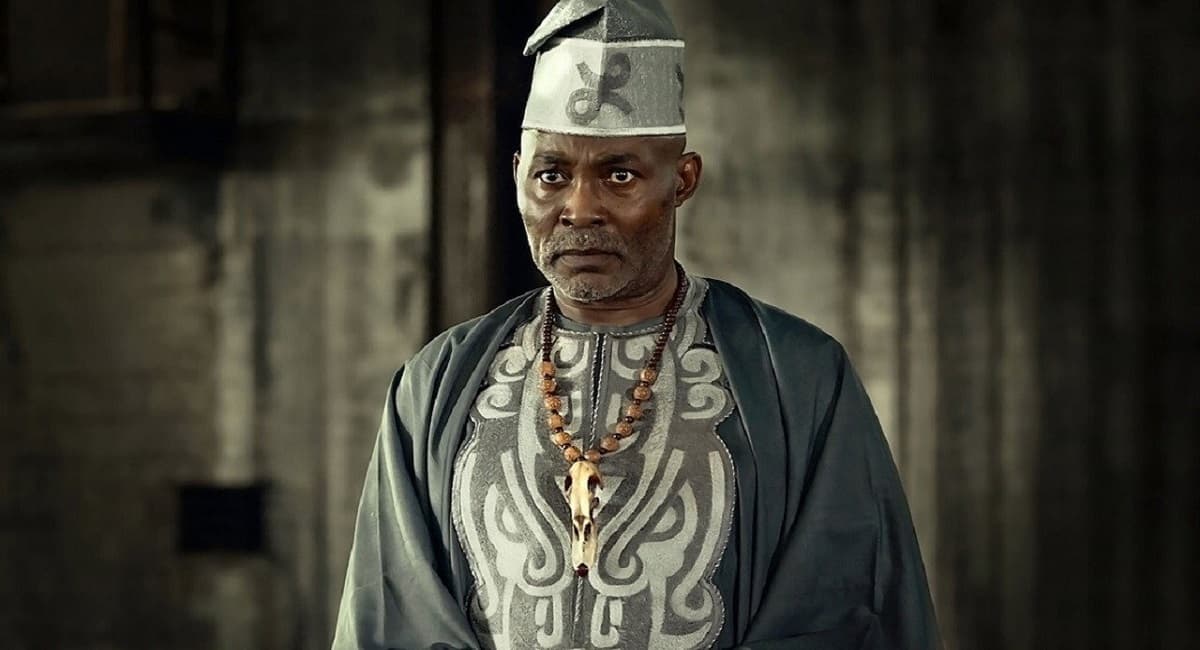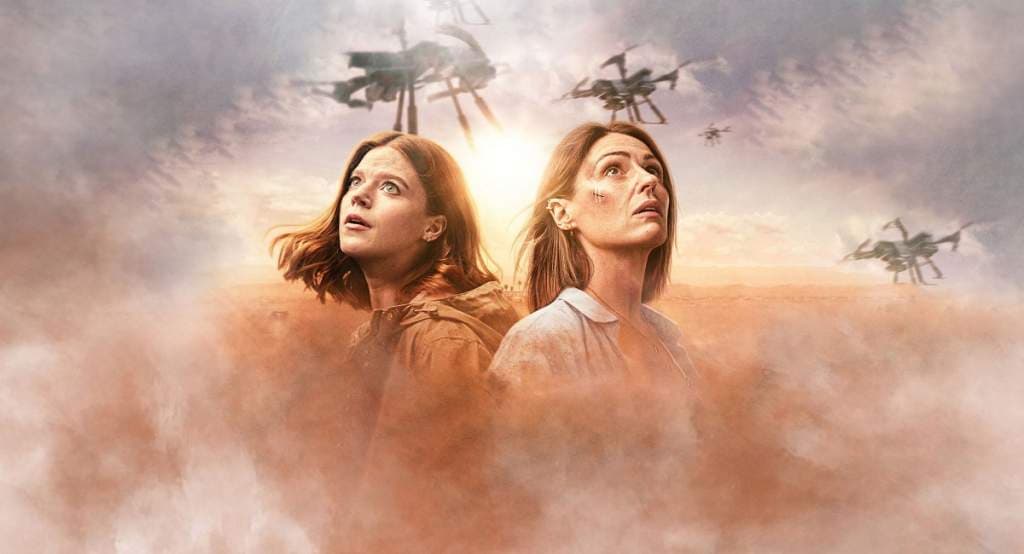
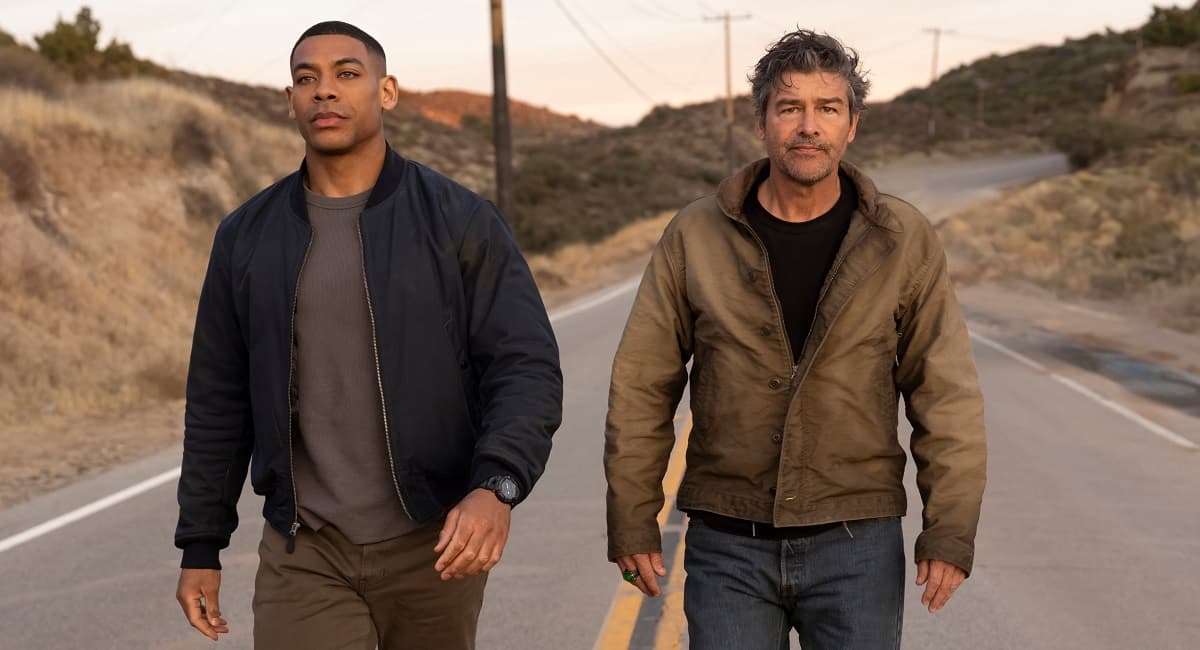
HBO’s Lanterns brings the Green Lantern mythology to the screen in a surprisingly grounded way. Instead of making the series feel like a traditional space-faring superhero adventure, the story follows veteran Green Lantern Hal Jordan and rookie John Stewart as they investigate a mysterious murder in the fictional American town of Rushville, Nebraska. The series was created by Chris Mundy, Damon Lindelof and Tom King, with Kyle Chandler playing Hal Jordan and Aaron Pierre portraying John Stewart. The cast also includes Kelly Macdonald, Garret Dillahunt, Poorna Jagannathan, Jason Ritter, Nathan Fillion and Ulrich Thomsen.
Lanterns premiered on August 16, 2026, on HBO and HBO Max, with its eight-episode first season releasing weekly.
But while the story is set largely in Rushville, Nebraska, viewers may be surprised to learn that the series was filmed primarily in Southern California. The production used real communities, studio stages and rural landscapes around the Los Angeles area to create the fictional Nebraska setting. One of the most important locations was Piru, California, which was transformed into Rushville for the series. Production also used Warner Bros. Studios in Burbank, while additional filming took place around the Los Angeles region, including the Pomona area.
You May Also Like




Where exactly was Lanterns filmed?
Why did California stand in for Nebraska? And how did the production make a sunny Southern California town look like the isolated American heartland?
Let’s take a closer look at all the major filming locations behind HBO’s Lanterns.
Piru, California — The Real Rushville
If there is one location that fans should remember from Lanterns, it is Piru, California.
This small historic community in Ventura County became the principal real-world stand-in for Rushville, Nebraska, the fictional town where much of the series’ murder mystery takes place. Production crews transformed parts of Piru so convincingly that viewers watching the finished series may have little idea they are actually looking at California rather than Nebraska.
Piru was a particularly smart choice for the production because its relatively low-rise buildings, broad streets, rural surroundings and agricultural landscape could be adapted to resemble a Midwestern town.
The production didn’t simply arrive for a single afternoon and shoot a few establishing shots. According to location and permit reports, the crew spent considerable time working around Center Street, Market Street, Piru Square and nearby areas. Storefronts and businesses were redressed to create the fictional Rushville environment, helping the town maintain a consistent appearance throughout the series.
Several locations around Center Street were involved in filming during late March and early April 2025. Production later returned to Piru for additional work, including a nighttime sequence around the intersection of Main Street and Center Street in June.
That repeated use of the same community was important because Lanterns is structured more like a detective drama than a conventional superhero show. Hal and John aren’t constantly jumping between spectacular locations. They are investigating a crime in one seemingly ordinary town.
Piru gives Rushville that sense of place.
The streets look lived-in. The buildings feel old enough to have history. The surrounding landscape creates the impression that the town is isolated from the rest of the country.
There is also an interesting visual trick involved.
Piru sits in a landscape surrounded by hills and mountains, while Nebraska is famous for its expansive plains and open horizons. The filmmakers therefore had to alter the landscape digitally. Showrunner Chris Mundy explained that visual effects were used to remove the surrounding mountains and create a more convincing Nebraska horizon.
That small detail demonstrates how much work went into making California look like Nebraska.
The result is a fictional town that feels authentic enough to support the show’s mystery.
Warner Bros. Studios, Burbank — The Studio Home of Lanterns
Another major filming location was Warner Bros. Studios in Burbank, California.
The historic studio complex at 4000 Warner Boulevard provided the production with soundstages and controlled environments for scenes that would have been difficult to film entirely on location. IMDb lists Warner Brothers Burbank Studios among the show’s filming locations, while the Television Academy reports that Lanterns used three stages on the Warner Bros. lot during its lengthy Los Angeles-area shoot.
One of the most notable sets constructed there was the Stewart family home.
The production reportedly built the Stewart house on Stage 19, creating a detailed interior that could be filmed repeatedly without the limitations of a real residential property. The set was designed to look lived-in rather than overly polished, with everyday furniture, family photographs and small details helping establish John’s personal history.
This attention to realism is a major part of the series’ visual identity.
Lanterns may feature Green Lantern rings and extraterrestrial threats, but the filmmakers deliberately wanted the human world to feel ordinary. A believable family home makes John Stewart feel like a real person before he becomes part of a much larger cosmic story.
The studio also offered another major advantage: complete control.
Scenes involving visual effects, Green Lantern constructs, complicated lighting or environments that could not easily be controlled outdoors could be filmed on stages. The production could shoot portions of a sequence on location in Piru and then seamlessly continue the scene inside a constructed environment in Burbank.
That combination of real streets and studio sets is one reason the series has such a grounded look.
Los Angeles, California — The Wider Production Area
Although Piru is perhaps the most recognizable filming location, Los Angeles and the surrounding Southern California region provided the broader production base for Lanterns.
IMDb currently lists Los Angeles, Burbank and California among the series’ filming locations.
Principal photography began in the Los Angeles area in early 2025 and continued for several months. The production originally had been expected to film in Atlanta, but the plans changed and the series ultimately moved its production to Southern California.
That change was significant.
Atlanta has become one of the biggest production hubs in the United States, and many major superhero projects have been filmed there. But Lanterns ultimately benefited from remaining in the Los Angeles production ecosystem.
The move also allowed the filmmakers to take advantage of Warner Bros. Studios and nearby locations without having to create an entirely new production base elsewhere.
For a show that needs to combine a small-town murder mystery with expensive superhero visual effects, that flexibility was valuable.
The Los Angeles region provided access to soundstages, crew, equipment and diverse landscapes within a relatively manageable production area.
And although Los Angeles itself doesn’t look anything like Nebraska, the surrounding region contains surprisingly varied environments. With careful production design, cinematography and visual effects, filmmakers can transform these locations into almost any part of the United States.
Lanterns takes full advantage of that flexibility.
Pomona — Rural Landscapes and Open Country
Another Southern California location connected to the production is Pomona, particularly areas around an old military base in the Inland Valley.
The Television Academy reported that some filming took place near an old military base in Pomona.
This type of location is especially useful for Lanterns because the series needs more than a town center.
Rushville is surrounded by the kind of open landscape that makes the story feel isolated. Hal and John need roads, fields, remote properties and empty stretches of land where their investigation can expand beyond the town itself.
Pomona’s more open environments helped provide that visual scale.
The location also fits the show’s unusual combination of genres. On the surface, Lanterns is a superhero series. But its storytelling has much more in common with a rural crime drama or neo-Western. The landscapes therefore need to feel empty, slightly mysterious and sometimes even threatening.
A remote outdoor location can make an ordinary conversation feel tense.
Put two Green Lanterns in a futuristic city and viewers immediately expect superhero action. Put them in an isolated field or on a deserted rural road and suddenly the scene feels like a mystery.
That contrast is exactly what Lanterns is trying to achieve.
Fillmore and the Ventura County Area
The production also extended beyond Piru into the wider Ventura County area.
Filming-location research has identified areas along East Telegraph Road in Fillmore as part of the production footprint. These locations provided additional rural roads and open-country environments that could complement Piru’s town streets.
The exact scene-to-location breakdown has not been publicly documented for every individual property, so it is better not to claim that a particular house or road represents a specific scene without confirmation.
What is clear is that the surrounding Ventura County landscape gave the production additional flexibility.
This area is particularly useful for productions looking for a combination of small-town architecture, farmland, hills and open roads.
For Lanterns, those characteristics were perfect for creating the feeling of a remote Midwestern community.
The filmmakers could shoot the town scenes in Piru, move to surrounding rural areas for exterior sequences, and then return to Burbank for controlled interior scenes.
To the viewer, all of those pieces become one fictional location: Rushville.
That is one of the biggest tricks behind the series’ production design.
Why Was Lanterns Filmed in California Instead of Nebraska?
Perhaps the most interesting question is not simply where Lanterns was filmed, but why the production didn’t film in Nebraska.
The answer comes down to production logistics, studio access, visual effects and the flexibility of Southern California. The story takes place in Nebraska, but the production doesn’t necessarily need Nebraska itself to recreate that environment. Piru already had many of the physical characteristics required for Rushville. Warner Bros. Studios provided the stages needed for interiors and effects-heavy sequences. Other Southern California locations supplied rural landscapes.
Together, they allowed the filmmakers to build a believable version of Nebraska without transporting the entire production across the country. There was also a creative advantage. The series wanted Rushville to feel like a fictional place with a very specific visual identity. Instead of being limited by whatever locations happened to be available in Nebraska, the production could modify Piru and combine it with studio environments.
The mountains surrounding Piru could be removed digitally. Storefronts could be redesigned. Roads could be dressed. Interiors could be completely constructed. And cinematography could tie everything together. The Television Academy specifically noted the challenge of creating the Nebraska horizon and removing the mountains from the California landscape.
This demonstrates how the production approached the setting. It wasn’t trying to make California look exactly like Nebraska in every frame. Instead, it created a cinematic version of Nebraska — one that feels familiar but slightly isolated and mysterious. That approach works particularly well for the show’s story.
The fictional Rushville is supposed to look ordinary. But underneath that ordinary surface is a murder investigation involving two Green Lanterns and a much larger threat. The more normal the town looks, the stranger the supernatural elements become.
When Was Lanterns Filmed?
Principal photography for Lanterns took place primarily during 2025.
IMDb lists the filming dates as February 10, 2025, through July 15, 2025, while other production reports describe the shoot as a roughly six-month Los Angeles-area production.
The production operated under the working title “Latitude”, a common practice used by major productions to keep filming activity less obvious before a project’s public release.
Filming moved between Warner Bros. stages and Southern California locations, with Piru becoming especially important during the later on-location work. By the time the series premiered in August 2026, the production had already spent more than a year in post-production, visual effects and other finishing stages.
So, where was HBO’s Lanterns filmed?
Although the story takes place in Rushville, Nebraska, the series was filmed primarily in Southern California.
The most important locations include Piru, California, which became the fictional Rushville; Warner Bros. Studios in Burbank, where major interior sets and controlled sequences were filmed; the wider Los Angeles area; and parts of Pomona and Ventura County, which provided additional rural landscapes.
Among all of these places, Piru is undoubtedly the most fascinating for fans. The quiet California community was transformed into a fictional Nebraska town, with storefronts, streets and businesses redesigned to create the world of Lanterns.
And that transformation tells you a lot about the series itself.
Lanterns is not trying to be a typical superhero show filled with nonstop spectacle. It wants its audience to believe in the ordinary world first. The quiet streets, family homes, rural roads and isolated landscapes make the murder mystery feel real before the story gradually opens the door to the stranger side of the DC Universe.
That is why California works so well.
The real-world locations provide the realism, while the visual effects and studio sets provide the superhero mythology.
In the end, the biggest surprise behind Lanterns may be that the fictional Nebraska town of Rushville is actually a carefully constructed combination of Piru, Burbank, Los Angeles and other Southern California locations.
So, if you ever find yourself watching Lanterns and thinking, “That definitely looks like Nebraska,” remember: there is a good chance you’re actually looking at California.
And that is the magic of movie and television locations — sometimes the place on screen is thousands of miles away from where the cameras were actually rolling.